
What's Happening?
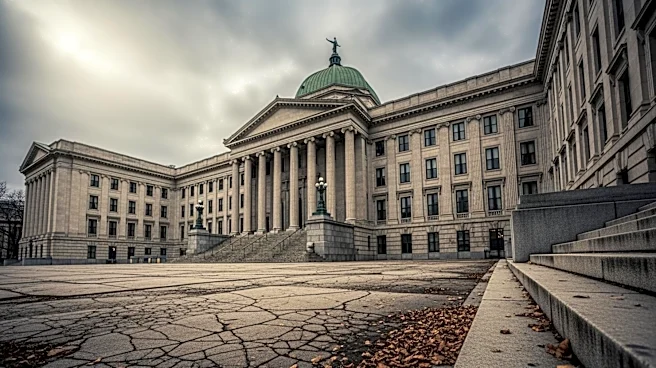
Los Angeles City Hall is under scrutiny for its neglected infrastructure and public spaces, including the Frank Putnam Flint fountain, which has been dry for years. The fountain, once a tribute to a former
U.S. senator, now stands as a symbol of neglect and failed leadership. The surrounding area, including Felipe de Neve Plaza and the Los Angeles Mall, is marked by graffiti, broken palm trees, and dead fronds. The condition of these public spaces raises questions about the city's ability to manage its own property, especially during an election year. Despite having a large workforce and police department nearby, security and maintenance remain challenges. Calls for action include restoring the fountain or removing it entirely, and addressing broader infrastructure issues across the city.
Why It's Important?
The state of Los Angeles City Hall and its surrounding areas highlights broader issues of urban neglect and infrastructure decay. This situation affects the quality of life for residents and reflects poorly on city leadership. The neglect of public spaces can lead to decreased civic pride and historical awareness, impacting community engagement and tourism. Moreover, the upcoming Olympics in Los Angeles add urgency to addressing these issues, as the city will be under international scrutiny. The failure to maintain public spaces could deter investment and development, affecting the city's economic prospects. Residents are increasingly taking matters into their own hands, organizing cleanups and advocating for change, which underscores the need for effective governance and accountability.
What's Next?
The upcoming city elections present an opportunity for residents to demand better infrastructure management and accountability from their leaders. Mayor Karen Bass and other city officials are urged to prioritize the restoration and maintenance of public spaces. Potential solutions include collaborating with nonprofits like Project Restore L.A. for preservation efforts and exploring redevelopment plans for areas like the Civic Center. The city must also address homelessness and crime, which contribute to the deterioration of public spaces. As residents continue to organize cleanups, city officials may face increased pressure to implement sustainable solutions and improve the overall urban environment.
Beyond the Headlines
The neglect of Los Angeles City Hall and its surroundings reflects deeper issues of urban governance and resource allocation. Budget constraints and bureaucratic challenges often hinder progress, but the city's leadership must overcome these obstacles to restore public trust. The situation also raises ethical questions about the responsibility of elected officials to maintain public spaces and ensure a safe, clean environment for all residents. Long-term solutions may require innovative approaches to urban planning and community engagement, fostering a sense of ownership and pride among residents. As Los Angeles prepares for the Olympics, the city's ability to address these challenges will be crucial in shaping its future.