






What's Happening?
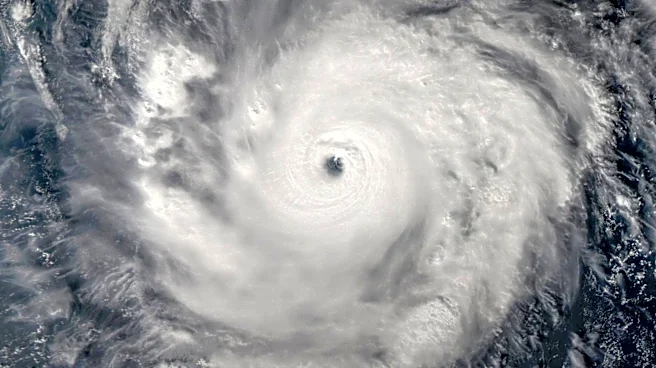
A new study published in Nature Geoscience, conducted by researchers in China and the U.S., utilized a high-resolution climate model to investigate the impact of global warming on mesoscale convective systems (MCSs) in tropical regions. MCSs are extensive
clusters of thunderstorms responsible for a significant portion of tropical rainfall and many intense rainstorms, including those causing devastating flash floods. The model, designed to represent these organized storms more realistically than conventional climate models, projected that under a high climate-warming scenario, the seasonal cycle of rainfall produced by MCSs would shift dramatically. Specifically, storms are predicted to form 10 to 15 days later, and once they do, they would be approximately 38 to 45 percent more intense. This shift is attributed to the atmosphere's increased effective heat capacity as the climate warms, which delays the seasonal migration of Hadley cells and the reversal of energy transport between hemispheres, pushing the rainfall peak later in the season.
Why It's Important?
This research has profound implications for tropical regions globally, including U.S. territories and states with tropical or subtropical climates, as it suggests a significant alteration to the timing and intensity of wet seasons. The findings indicate that even if annual rainfall totals remain similar, its delivery in shorter, more intense bursts can lead to increased flood risks, disruptions to agriculture, and challenges for water management. For U.S. interests, particularly in areas like Florida, Hawaii, and Puerto Rico, understanding these shifts is crucial for disaster preparedness, infrastructure planning, and agricultural resilience. More intense storms mean greater potential for property damage, displacement of populations, and loss of life, as exemplified by the 2020 MCS-driven Sahelian flood that affected millions. The study underscores the limitations of current forecasting models that often struggle to accurately simulate these complex weather systems, highlighting a critical need for improved climate modeling to inform policy and adaptation strategies.
What's Next?
While the study used a high-warming scenario that may not fully materialize due to shifts towards renewable energy, its findings serve as a critical warning about climate-driven weather extremes. Researchers emphasize the need for more simulations from different climate models and various warming scenarios to refine regional predictions. This ongoing research will be vital for farmers, local leaders, and other stakeholders who rely on predictable climate patterns. The development of more sophisticated, high-resolution climate models will enable better forecasting of MCS behavior, allowing for more effective early warning systems and disaster mitigation strategies. Policymakers and urban planners in vulnerable U.S. regions will need to consider these projected changes in rainfall seasonality and intensity when developing long-term climate adaptation plans, including investments in flood control infrastructure and water resource management. The study also implicitly calls for continued global efforts to reduce greenhouse gas emissions to mitigate the most severe warming scenarios.
Beyond the Headlines
This study delves into the less obvious, yet critical, aspect of climate change: not just how much rain falls, but when and how it falls. The concept of "energetic inertia" and its impact on Hadley cells reveals a complex atmospheric mechanism that dictates regional weather patterns, demonstrating how global warming can subtly yet profoundly alter fundamental climate processes. The ethical dimension arises in how societies prepare for and protect vulnerable populations from these intensified and delayed weather events, especially given that the most affected regions often have fewer resources for adaptation. Culturally, a shift in rainy seasons could disrupt traditional agricultural practices and local economies that have evolved over centuries based on predictable weather cycles. Legally, these findings could influence land-use policies, building codes, and insurance regulations, potentially leading to stricter requirements for development in newly identified high-risk areas. The research also highlights the continuous scientific endeavor to understand and predict climate change's multifaceted impacts, moving beyond simple temperature increases to complex hydrological shifts that have direct, tangible consequences for human civilization.