



What's Happening?
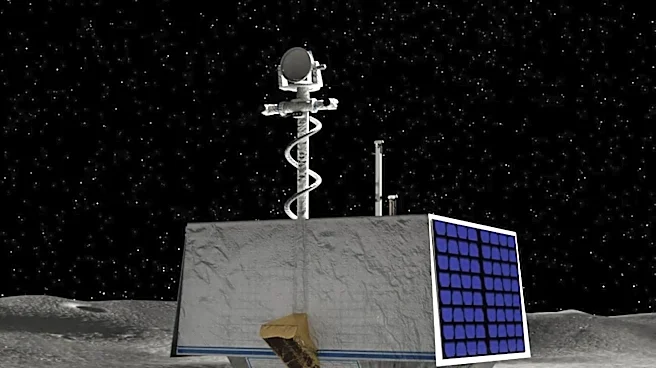
A new study by Frederick I. Moxley and Anthony Ricciardi suggests establishing a lunar biocontainment facility to quarantine extraterrestrial samples before they are brought to Earth. This proposal arises from concerns that samples from Mars or other
celestial bodies could harbor biological entities with unpredictable effects on Earth's biosphere. The study highlights the potential risks of introducing novel organisms with atypical biochemistry that could be hazardous to Earth's ecosystems and human health. The researchers argue that the Moon could serve as a preemptive shield, ensuring that exploration does not compromise Earth's biosphere.
Why It's Important?
The proposal to quarantine extraterrestrial samples on the Moon underscores the importance of planetary protection in space exploration. As space agencies like NASA and China's space program plan to return samples from Mars, the potential for contamination poses significant ecological and health risks. Establishing a lunar quarantine facility could prevent the introduction of invasive extraterrestrial organisms, safeguarding Earth's environment. This approach reflects a growing recognition of the need for precautionary measures in space exploration, balancing scientific advancement with environmental stewardship.
What's Next?
The implementation of a lunar quarantine facility would require international collaboration and significant investment. Space agencies and governments will need to assess the feasibility and cost-effectiveness of such a facility compared to the potential risks of extraterrestrial contamination. The development of quarantine protocols and infrastructure on the Moon could also pave the way for future interplanetary exploration, setting a precedent for how humanity manages biological risks in space. As discussions progress, the scientific community will play a crucial role in shaping policies and ensuring that exploration efforts are conducted responsibly.