





What's Happening?
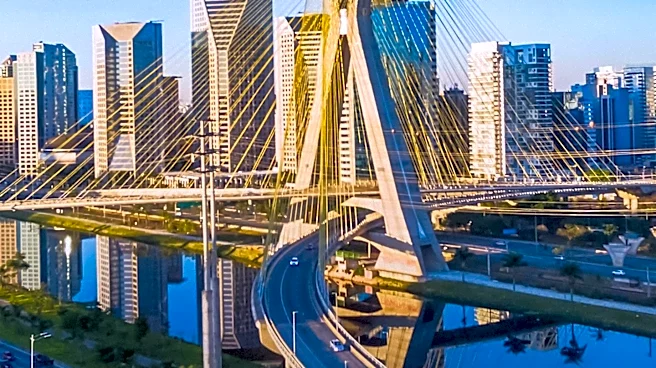
São Paulo, often referred to as 'Sampa,' stands as Brazil's economic capital and Latin America's largest metropolis, boasting a population of 22 million inhabitants. The city is characterized by its extensive skyline of skyscrapers, a powerful financial
district, and a vibrant cultural scene. It serves as a crucial gateway for travelers to Brazil, hosting the country's largest airport. São Paulo's urban lifestyle is compared to major European cities, reflecting the diverse ancestry of its residents, yet it maintains a distinctly Brazilian identity. The city offers a rich architectural heritage dating back to its founding in 1554 by Jesuit pioneers and features numerous cultural institutions, including the renowned MASP (São Paulo Museum of Art).
Why It's Important?
São Paulo's status as Brazil's economic powerhouse makes it a critical center for business and investment, not just within Brazil but across Latin America. Its robust financial district and extensive infrastructure, including the largest airport, facilitate international trade and commerce, impacting global supply chains and investment flows. For U.S. businesses, São Paulo represents a significant market and a strategic location for regional operations, offering access to a large consumer base and a skilled workforce. The city's cultural vibrancy also contributes to its appeal, attracting tourism and fostering a dynamic environment for innovation and creativity. The economic stability and growth in São Paulo can have ripple effects on regional economies, influencing trade relationships and investment opportunities for U.S. companies.
What's Next?
São Paulo is expected to continue its trajectory as a leading economic and cultural hub. Ongoing urban development and infrastructure projects will likely further enhance its connectivity and capacity for business and tourism. The city's focus on cultural diversity and modern living suggests a sustained effort to attract international talent and investment. As a major destination for Latin American travelers, São Paulo will remain a key player in the regional tourism industry. The continuous evolution of its financial and technological sectors will likely solidify its position as a strategic location for multinational corporations, including those from the U.S., looking to expand their presence in Latin America.
Beyond the Headlines
Beyond its economic and cultural significance, São Paulo embodies a unique blend of tradition and modernity. Its urban landscape, marked by towering skyscrapers and bustling avenues like Paulista, reflects a dynamic society constantly evolving. The city's rich history, from its colonial origins to its current status as a global metropolis, offers a compelling narrative of development and adaptation. The comparison to European cities highlights its cosmopolitan nature, while its Brazilian essence ensures a distinct identity. This blend creates a complex social fabric, influencing everything from local politics to artistic expression. São Paulo's continuous growth and transformation serve as a microcosm of broader trends in urbanization and globalization, offering insights into the challenges and opportunities faced by large cities worldwide.