







What's Happening?
Chinese-built electric vehicles (EVs) are set to be introduced to the Canadian market, with Geely-owned Lotus leading the charge under a new trade agreement between Canada and China. This agreement, established in January, allows up to 49,000 Chinese-made
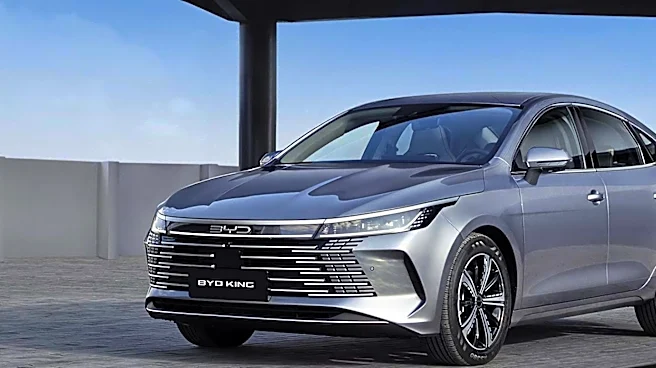
EVs to enter Canada annually with preferential tariff treatment. The first deliveries of Lotus vehicles are expected next month in Montreal. Other Chinese automakers, such as BYD and Chery, are also preparing to enter the Canadian market, having already sent test vehicles for evaluation. This development comes as Chinese automakers face significant barriers to entry in the United States, where steep tariffs and restrictions on connected vehicle technology have limited their market access.
Why It's Important?
The introduction of Chinese EVs to Canada represents a strategic shift in trade relations, as Canada seeks to diversify its trade partners beyond the United States. This move could provide Canadian consumers with access to a wider range of competitively priced electric vehicles, which are currently unavailable in the U.S. The agreement also highlights the growing importance of international trade partnerships in the EV market, as countries like Canada look to strengthen their domestic EV supply chains through foreign investment and joint ventures. For Chinese automakers, Canada offers a new market opportunity to expand their global footprint, especially as they face challenges in entering the U.S. market.
What's Next?
As Chinese automakers establish a presence in Canada, they may explore manufacturing partnerships and further investment opportunities within the country. The success of these initial vehicle deliveries could pave the way for additional Chinese brands to enter the Canadian market. Meanwhile, the U.S. may continue to enforce trade barriers, potentially prompting Chinese automakers to focus on other international markets. The evolving trade dynamics could influence future policy decisions in both Canada and the U.S., as they navigate the complexities of international trade and domestic industry development.