







What's Happening?
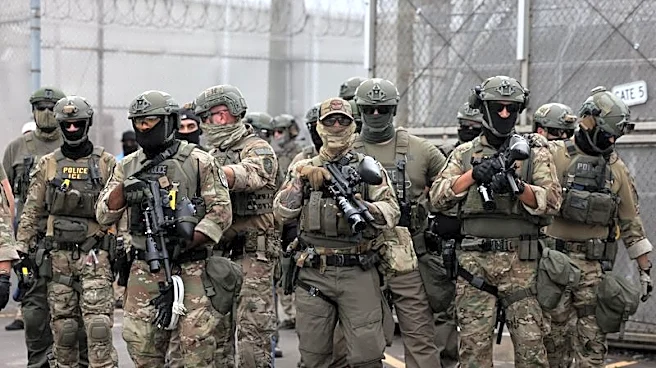
The U.S. Immigration and Customs Enforcement (ICE) has denied maintaining a database of protesters, despite a letter to Congress revealing that ICE collects information on individuals suspected of interfering with operations. The letter, sent by former
acting ICE director Todd Lyons, acknowledges the collection of biographic and biometric data at protests involving alleged criminal conduct. Civil liberties experts have raised concerns about the implications for First Amendment rights, as ICE's practices may involve tracking individuals who are not arrested. The letter was sent in response to inquiries from Rep. Maxwell Frost and other Democratic members of Congress.
Why It's Important?
The revelation of ICE's data collection practices raises significant concerns about privacy and civil liberties, particularly regarding the surveillance of U.S. citizens exercising their First Amendment rights. The potential for federal agencies to maintain records on peaceful protesters could have chilling effects on public demonstrations and activism. This issue is particularly relevant in the context of heightened immigration enforcement and protests against ICE operations. The controversy may lead to increased scrutiny of ICE and DHS practices, as well as potential legal challenges.
What's Next?
Rep. Maxwell Frost and other lawmakers are likely to continue pressing ICE and DHS for transparency regarding their data collection practices. Legal challenges may arise from civil liberties organizations seeking to protect First Amendment rights. The issue may also prompt legislative efforts to regulate surveillance practices and ensure accountability for federal agencies. Public and political pressure could lead to policy changes within ICE and DHS.