




What's Happening?
The Israel Defense Forces (IDF) has released two documents, seized in Gaza, which reportedly detail the extensive use of hospitals by Hamas and Palestinian Islamic Jihad (PIJ) for terrorist operations. The first document, from 2019 and authored by a Hamas deputy
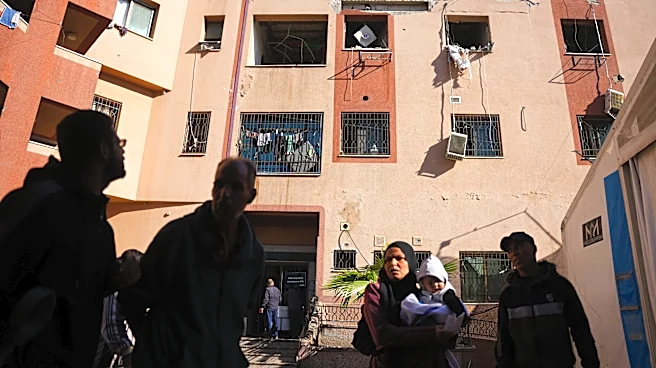
commander, outlines protocols for interrogating suspects at Nasser Hospital, Red Crescent Hospital, and European Hospital. It also details guidelines for wartime patrols. The second document, from 2020, is a request from PIJ to the Hamas-run Gaza health ministry for space to conduct terrorist activities, criticizing PIJ for poor coordination at Shifa, Al-Rantisi, and Kamal Adwan hospitals. This document, found near Shifa Hospital, mentions activities such as positioning mortar shells, documenting rocket launches, taking over offices, and establishing operations rooms within medical facilities. The IDF asserts that these documents provide clear indications of systematic exploitation of medical infrastructure by terrorist groups, violating international law that protects such facilities.
Why It's Important?
The IDF's release of these documents is significant as it aims to substantiate claims that Hamas and PIJ deliberately use civilian infrastructure, particularly hospitals, for military purposes. This practice, if proven, constitutes a violation of international humanitarian law, which grants protected status to medical facilities. The implications are far-reaching, as it complicates military operations in densely populated areas and raises questions about the accountability of non-state actors in conflict zones. For the U.S. and its allies, these findings could influence diplomatic efforts and public discourse surrounding the conflict, potentially shifting narratives about the conduct of hostilities. It also underscores the challenges faced by humanitarian organizations operating in such environments, as the alleged misuse of hospitals can erode trust and jeopardize the safety of medical personnel and patients.
What's Next?
The IDF states it possesses further evidence of terrorist activities in Gaza hospitals, suggesting more information may be released. This could lead to increased international scrutiny of Hamas and PIJ's operational tactics and potentially influence future military strategies in urban warfare. Humanitarian organizations may face renewed challenges in ensuring the neutrality and protection of medical facilities, possibly prompting calls for stricter oversight or new protocols in conflict zones. Diplomatically, these revelations could be used by Israel to counter criticisms regarding its military actions in Gaza, while opponents may question the authenticity or interpretation of the documents. The ongoing conflict will likely see continued debate over the adherence to international law by all parties involved, with these documents serving as a focal point in discussions about the conduct of warfare.
Beyond the Headlines
The alleged systematic exploitation of hospitals by Hamas and PIJ raises profound ethical and legal questions about the conduct of warfare and the protection of civilians. The use of medical facilities for military purposes blurs the lines between combatants and non-combatants, potentially endangering patients and medical staff and undermining the fundamental principles of medical neutrality. This situation could set a dangerous precedent, making it more difficult to protect healthcare infrastructure in future conflicts globally. It also highlights the complex challenges of distinguishing between legitimate military targets and protected civilian sites in urban environments. The long-term implications include a potential erosion of international norms regarding the sanctity of hospitals and a heightened risk for healthcare workers in conflict zones, demanding a re-evaluation of strategies to safeguard medical neutrality and ensure compliance with international humanitarian law.