
What's Happening?
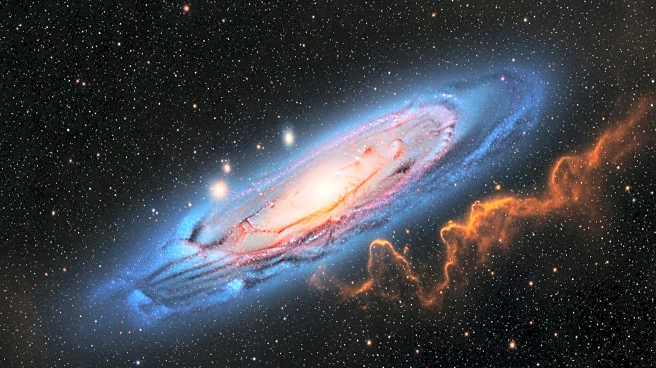
A team of astronomers from the University of Missouri has identified a unique set of galaxies using NASA's James Webb Space Telescope. These galaxies, described as 'astronomy's platypus,' exhibit a combination
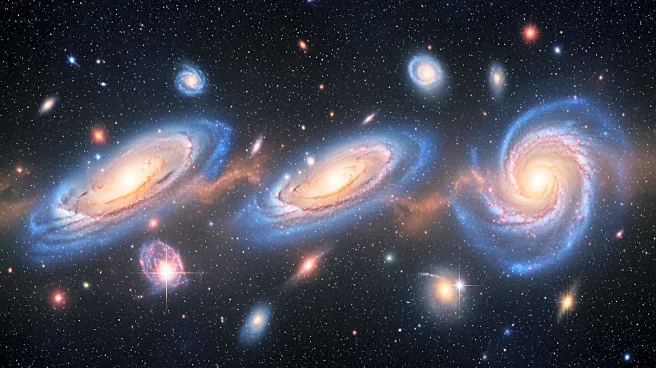
of features not previously observed. Unlike typical distant point sources, which are usually quasars with active supermassive black holes, these galaxies are extremely compact and lack the expected quasar characteristics. The discovery was presented at the American Astronomical Society meeting, highlighting the galaxies' point-like appearance and narrow spectral peaks, suggesting slower gas movement. This finding challenges existing definitions and suggests these galaxies might represent an earlier stage of galaxy formation.
Why It's Important?
This discovery is significant as it could reshape our understanding of galaxy formation and evolution. The identification of these galaxies suggests the possibility of observing earlier stages of galaxy development than previously possible. This could provide insights into the processes that lead to the formation of larger galaxies, like the Milky Way, through mergers of smaller galaxies. The findings challenge current astronomical models and could lead to new theories about the universe's early structure. The research underscores the capabilities of the James Webb Space Telescope in revealing previously unseen cosmic phenomena, potentially leading to breakthroughs in our understanding of the universe.
What's Next?
The research team plans to expand their study by analyzing a larger sample of these unusual galaxies with higher-resolution spectra. This will help determine whether these galaxies are indeed star-forming or represent a new category of cosmic objects. The team aims to explore the implications of their findings and utilize the Webb Telescope's capabilities to further investigate the nature of these galaxies. This ongoing research could provide deeper insights into the early stages of galaxy formation and the universe's evolution.