

What's Happening?
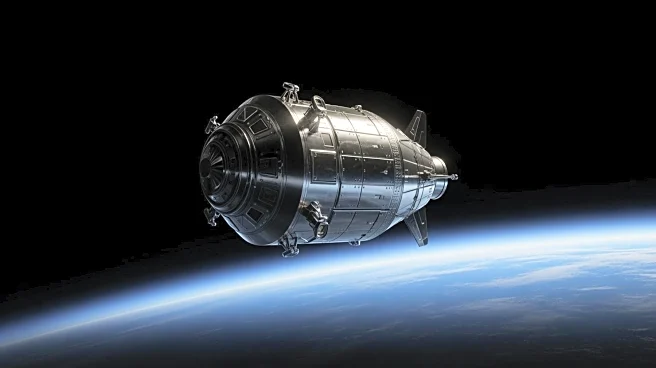
Japan's HTV-X1 cargo spacecraft is set to depart from the International Space Station (ISS) today after a four-month mission. The HTV-X1, the first of its kind, will be released by the station's Canadarm2 robotic arm at 12 p.m. EST. This mission marks
the debut of the HTV-X series, which succeeds the H-II Transfer Vehicle that completed nine missions between 2009 and 2020. The HTV-X1 launched on October 25, carrying approximately 9,000 pounds of supplies to the ISS. After its release, the spacecraft will remain in orbit for over three months, serving as a platform for scientific experiments conducted by the Japan Aerospace Exploration Agency (JAXA). Eventually, it will re-enter Earth's atmosphere, disposing of several thousand pounds of trash.
Why It's Important?
The HTV-X1 mission represents a significant advancement in Japan's space exploration capabilities, showcasing the country's commitment to supporting international space missions. The spacecraft's ability to remain in orbit for extended periods allows for ongoing scientific research, contributing to the global understanding of space environments. This mission also highlights the importance of international collaboration in space exploration, as the HTV-X1 supports NASA and other international partners by delivering essential supplies to the ISS. The successful deployment and operation of the HTV-X1 could pave the way for future missions, enhancing the efficiency and sustainability of space logistics.
What's Next?
Following its release from the ISS, the HTV-X1 will continue to orbit Earth, conducting experiments for JAXA. The spacecraft's eventual re-entry will be carefully monitored to ensure the safe disposal of onboard waste. The data and experiences gained from this mission will inform the development of future HTV-X series spacecraft, potentially leading to more advanced and capable cargo missions. Additionally, the success of the HTV-X1 could strengthen Japan's role in international space exploration efforts, encouraging further collaboration and innovation in the field.