






What's Happening?
Portland General Electric (PGE) has recently become a participant in the California Independent System Operator’s (CAISO) Extended Day-Ahead Market (EDAM). This move allows PGE to engage in buying and selling energy in the day-ahead timeframe, which is where
the majority of electricity transactions occur. According to Maria Pope, president and CEO of Portland General Electric, this participation provides access to a broader portfolio of resources across the Western U.S., aiding in cost management, reliability enhancement, and supporting Oregon's clean energy future. PGE has a history of collaboration with CAISO, having participated in its Western Energy Imbalance Market (WEIM) since 2017, which has reportedly generated approximately $377 million in cumulative benefits for the company and its customers. The EDAM initiative, which launched in May, has already yielded over $11 million in initial benefits for participating entities within its first two months of operation. Elliot Mainzer, president and CEO of the California ISO, noted that PGE's involvement signifies growing momentum for regional market collaboration in the West, expanding resource diversity and strengthening the market's ability to deliver economic and reliability benefits.
Why It's Important?
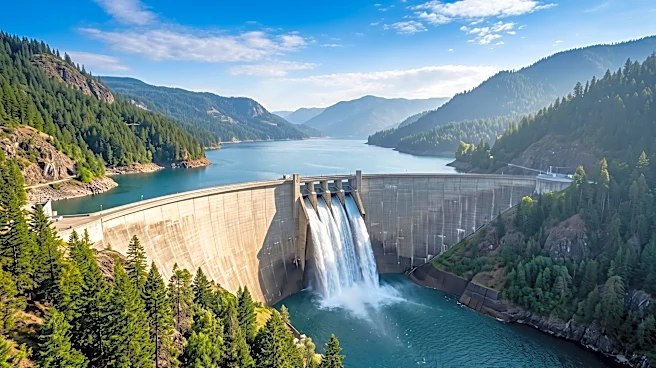
PGE's integration into CAISO's EDAM is a significant development for the U.S. energy sector, particularly in the Western states. This collaboration facilitates a more efficient utilization of diverse energy resources, including hydropower and wind from the Pacific Northwest, and solar generation from California and the desert Southwest. By optimizing supply, demand, and transmission across a wider geographic area, the market aims to lower costs for consumers and improve grid reliability. This is crucial as the nation increasingly shifts towards renewable energy sources, which often have intermittent generation patterns. The ability to trade energy in a day-ahead market allows utilities to better plan for future energy needs, reducing reliance on less efficient or more carbon-intensive power sources. The reported financial benefits from PGE's previous participation in WEIM suggest that EDAM could lead to substantial economic advantages for the company and its customers, potentially setting a precedent for other utilities considering similar collaborations. This initiative underscores a broader trend towards regional energy market integration as a strategy to achieve clean energy goals and enhance grid stability.
What's Next?
The expansion of CAISO's EDAM is set to continue, with several additional utilities slated to join in the coming years. In 2027, the Los Angeles Department of Water and Power, the Balancing Authority of Northern California, the Public Service Company of New Mexico, and Turlock Irrigation District are expected to become participants. Further expansion is anticipated in 2028, with commitments from the Imperial Irrigation District, BHE Montana, and NV Energy. This phased integration indicates a strategic, long-term effort to create a more interconnected and efficient energy market across the Western U.S. As more utilities join, the market's ability to leverage diverse energy resources and optimize grid operations is expected to grow, potentially leading to further cost reductions and improved reliability for a larger customer base. The success and benefits observed from PGE's participation and the initial months of EDAM operations will likely serve as a model and incentive for future participants, driving continued regional collaboration in the energy sector.
Beyond the Headlines
The move by Portland General Electric to join CAISO's EDAM highlights a critical shift in how U.S. energy grids are managed, moving towards greater regional cooperation and market-based solutions for energy challenges. This integration is not merely about economic efficiency; it also has profound implications for environmental sustainability and energy security. By enabling more efficient use of renewable energy sources across a broader footprint, EDAM contributes to reducing carbon emissions and accelerating the transition to a clean energy economy. The collaborative framework also enhances grid resilience, as a wider pool of resources can be tapped into during periods of high demand or unexpected outages, mitigating risks associated with localized energy disruptions. This approach could also influence policy decisions at both state and federal levels, encouraging further regulatory support for inter-state energy trading and infrastructure development. The long-term success of EDAM could serve as a blueprint for other regions in the U.S., fostering a more robust, sustainable, and interconnected national energy infrastructure.