



What's Happening?
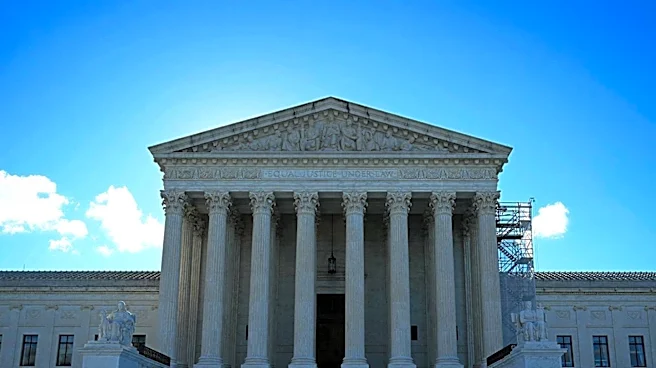
Civil rights advocates have formally requested the U.S. Supreme Court to review a Texas law mandating the display of the Ten Commandments in public school classrooms. This action sets the stage for a potential new legal challenge concerning state-sponsored
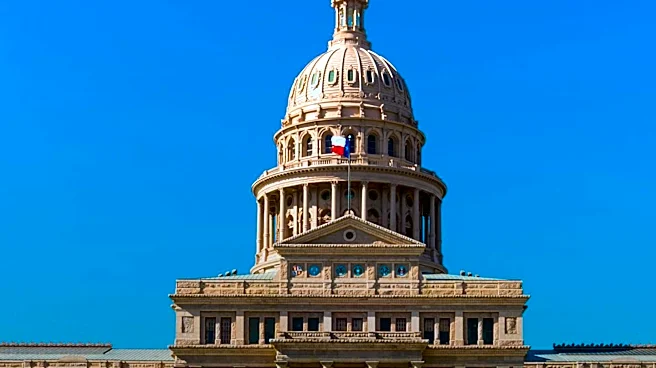
religious expression within educational settings. The Texas law, signed by Republican Governor Greg Abbott and effective since last September, requires school districts to display the Ten Commandments if donated. Consequently, conservative groups and individuals have been distributing these posters to campuses across the state. The New Orleans-based 5th U.S. Circuit Court of Appeals previously upheld the Texas law in a 9-8 ruling, overturning lower federal court decisions that had blocked some Texas school districts from implementing the displays. Similar laws have also been enacted in Louisiana, Arkansas, and Alabama, making this a matter of nationwide importance, according to Heather Weaver, an attorney with the American Civil Liberties Union (ACLU). The ACLU and other groups represent over two dozen Texas families in this petition to the nation's highest court.
Why It's Important?
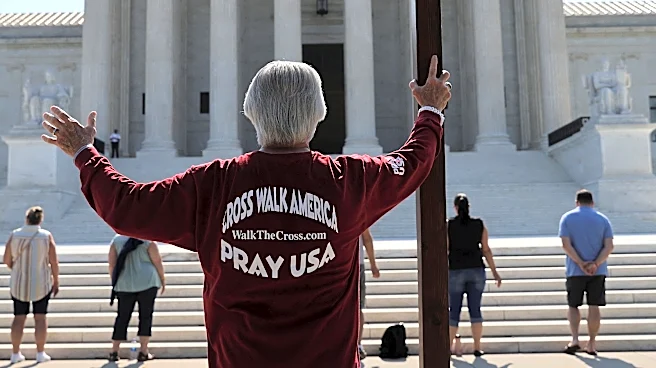
This legal challenge is significant as it directly addresses the interpretation and application of the First Amendment's Establishment Clause, which prohibits Congress from establishing a religion. The outcome could redefine the boundaries of religious expression in public education across the United States. A ruling by the Supreme Court could either reinforce or alter the precedent set by a 1980 decision, where the Court found a similar Kentucky law to have no secular purpose and thus violated the Establishment Clause. If the Texas law is upheld, it could encourage more states to enact similar legislation, potentially leading to a broader integration of religious texts into public school environments. Conversely, if struck down, it would reaffirm the principle of separation of church and state in public education, impacting millions of students and families nationwide. The case highlights the ongoing tension between religious freedom and the constitutional mandate for governmental neutrality towards religion, with implications for educational policy and civil liberties.
What's Next?
The U.S. Supreme Court will now consider the petition from civil rights advocates to review the Texas law. If the Court agrees to hear the case, it will schedule oral arguments and eventually issue a ruling that could have far-reaching implications for public education and religious freedom across the country. The decision to take up the case itself would signal the Court's willingness to revisit or clarify its stance on the Establishment Clause in the context of public schools. Regardless of whether the Court accepts the case, the ongoing debate is likely to continue influencing legislative efforts in other states considering similar laws. Stakeholders, including civil liberties organizations, religious groups, and educational institutions, will closely monitor the Court's actions, preparing for potential legal and policy adjustments based on the outcome. The Texas Attorney General's office has not yet commented on the petition, but their response would be crucial if the Supreme Court decides to hear the case.
Beyond the Headlines
The legal battle over displaying the Ten Commandments in public schools delves into the fundamental question of how religious texts are perceived and utilized within a secular educational system. Beyond the immediate legal implications, this case touches upon the cultural and ethical dimensions of religious instruction and indoctrination in public institutions. Critics argue that such displays can create an environment where students from non-Christian backgrounds or those with no religious affiliation may feel marginalized or coerced, undermining the inclusive nature of public education. Proponents, however, often view these displays as a means of promoting moral values and acknowledging the historical influence of religious texts. The case also highlights the broader trend of states pushing the boundaries of religious expression in public life, often leading to legal challenges that test the limits of constitutional protections. The Supreme Court's eventual decision will not only set a legal precedent but also contribute to the ongoing societal discourse about the role of religion in American public institutions and the interpretation of foundational constitutional principles.