



What's Happening?
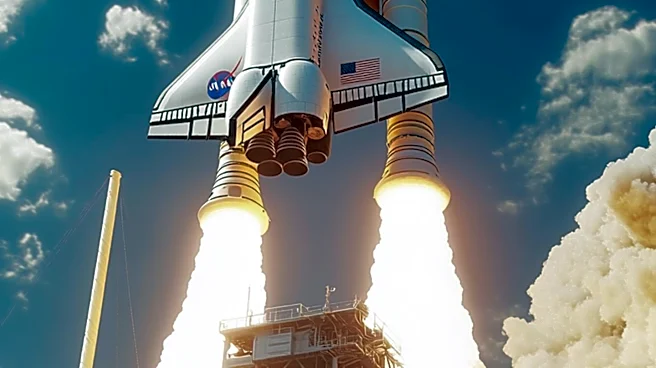
On April 12, 1981, NASA's Space Shuttle Columbia embarked on its inaugural flight, marking a significant milestone in space exploration. However, the launch was not without its challenges. During the initial seconds of liftoff, Columbia experienced unexpected
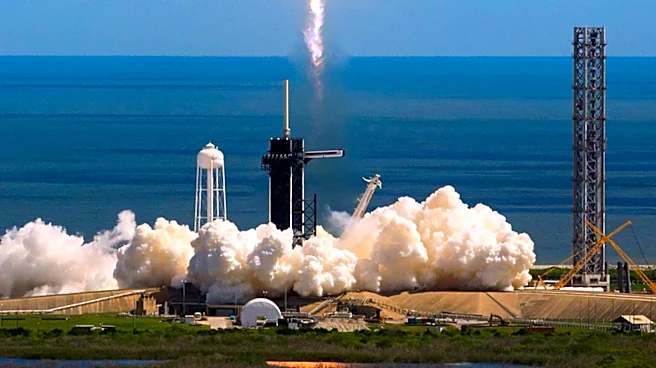
damage to its thermal protection system. Engineers discovered that 16 heat shield tiles were missing and 148 were damaged. This damage was not due to any mechanical failure but was caused by the shockwave generated by the shuttle's own engines. The shockwave reflected off the launch pad and impacted the shuttle, highlighting a critical oversight in the launch process. To mitigate this issue in future launches, NASA implemented a sound suppression system that uses water to absorb the acoustic energy, preventing it from reflecting back onto the shuttle.
Why It's Important?
The incident with Columbia underscores the complexities and challenges inherent in space exploration. The damage caused by the shockwave highlights the need for meticulous planning and engineering to ensure the safety and success of space missions. This event led to significant changes in how NASA approached shuttle launches, particularly in terms of managing the acoustic energy produced during liftoff. The implementation of the sound suppression system has been crucial in preventing similar incidents in subsequent missions. This development not only improved the safety of shuttle launches but also contributed to the overall reliability and success of NASA's space exploration efforts.
What's Next?
Following the Columbia incident, NASA has continued to refine its launch procedures to enhance safety and efficiency. The sound suppression system, which releases hundreds of thousands of gallons of water during liftoff, has become a standard feature in shuttle launches. As NASA continues to develop new spacecraft and launch systems, lessons learned from past experiences like Columbia's will inform future designs and protocols. The ongoing evolution of launch technology aims to minimize risks and ensure the success of future missions, including those planned for deep space exploration.
Beyond the Headlines
The Columbia incident also highlights the importance of understanding the physical forces at play during a rocket launch. The challenges faced by the shuttle were not due to external factors but were a result of the inherent dynamics of rocket propulsion. This realization has driven advancements in aerospace engineering, emphasizing the need to account for all potential variables in the design and execution of space missions. The incident serves as a reminder of the delicate balance between technology and the natural forces it must contend with.