








What's Happening?
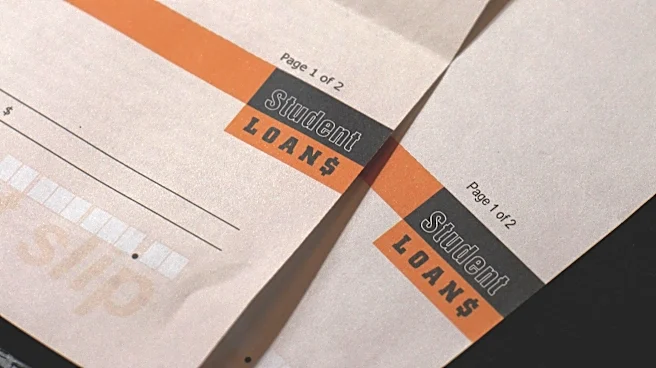
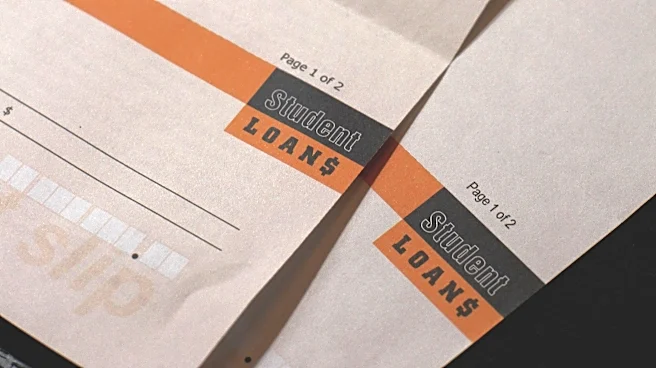
Millions of student loan borrowers are facing a significant financial reckoning as collections are set to resume for those in default. Following the expiration of pandemic-related forbearance last year, over 9 million borrowers have already defaulted
on their student loans, collectively owing an estimated $234 billion. These borrowers could soon experience garnished wages and seized tax refunds as early as next year. This development marks the end of a long-postponed period of relief, bringing back the full force of collection mechanisms for those unable to meet their repayment obligations. The situation affects a substantial portion of the student loan population, signaling a challenging period for many households across the country.
Why It's Important?
The impending resumption of aggressive collection actions for defaulted student loans carries significant economic and social implications. For the over 9 million borrowers affected, wage garnishments and tax refund seizures will directly reduce their disposable income, potentially impacting their ability to cover essential living expenses, save, or contribute to the economy through spending. This could lead to increased financial hardship for many families, exacerbating existing economic inequalities. On a broader scale, a large number of individuals facing such financial strain could have ripple effects on consumer spending, housing markets, and overall economic stability. It also highlights the ongoing challenges within the student loan system and the long-term financial burden many Americans carry due to higher education costs.
What's Next?
As collections for defaulted student loans are set to resume, borrowers in default should anticipate potential wage garnishments and tax refund seizures in the coming year. It is crucial for affected individuals to understand their options, which may include exploring rehabilitation programs, consolidation, or other repayment plans to avoid or mitigate these collection actions. Government agencies and loan servicers will likely intensify their outreach to defaulted borrowers, providing information on available pathways. Advocacy groups may also increase their efforts to support borrowers and push for policy changes that offer more sustainable solutions. The coming months will be critical for millions of Americans as they navigate these renewed financial pressures and seek ways to manage their student loan debt.
Beyond the Headlines
The looming wave of student loan collections extends beyond immediate financial hardship, touching upon deeper societal issues related to access to education, economic mobility, and intergenerational wealth. The sheer volume of defaulted loans—over $234 billion owed by 9 million borrowers—underscores a systemic problem where the cost of higher education often outweighs the financial benefits for a significant portion of graduates. This situation can perpetuate cycles of debt, hinder wealth accumulation, and limit economic opportunities for a generation. It also raises ethical questions about the efficacy and fairness of the current student loan system, prompting ongoing debates about loan forgiveness, interest rates, and the role of government in higher education financing. The impact of these collections will likely be felt for years, influencing policy discussions and individual financial futures.