


What's Happening?
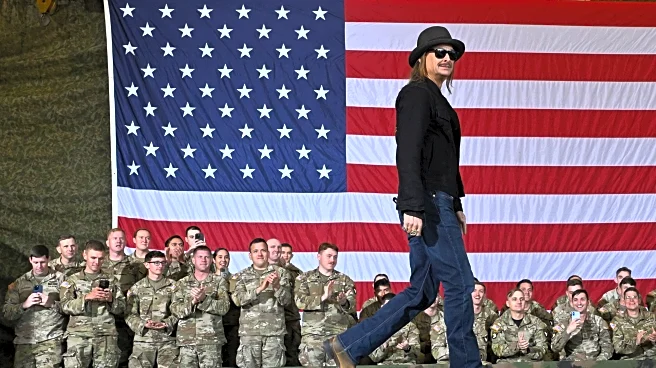
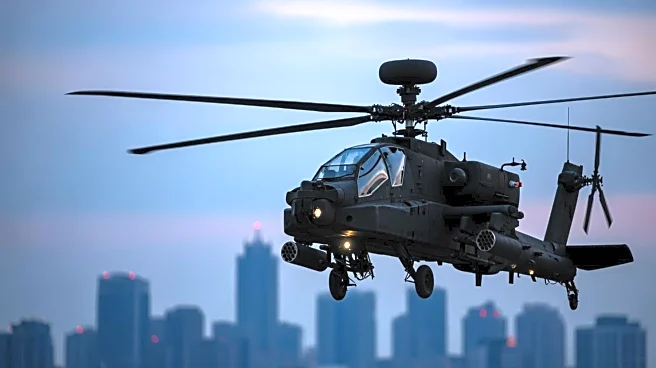
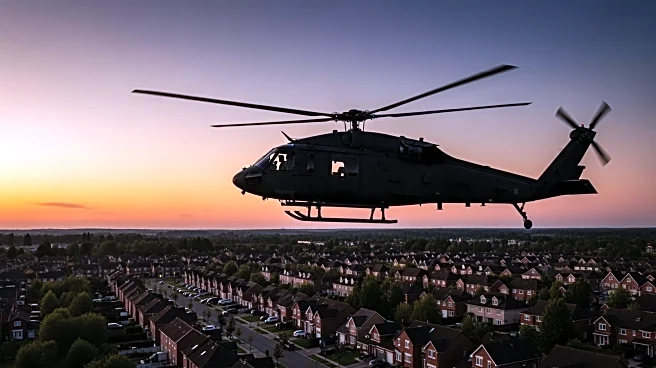
The U.S. Army has initiated an investigation following a video posted by musician Kid Rock, which shows him fist-pumping at two military helicopters flying near his residence in Whites Creek, Nashville. The helicopters, identified as AH-64 Apache attack
helicopters, reportedly flew over a 'No Kings' protest in downtown Nashville before heading to Kid Rock's location. The video, which was shared on Kid Rock's social media, included a caption criticizing California Governor Gavin Newsom. The incident has sparked public concern over the use of military resources, with questions raised about taxpayer funding for such activities. Military officials at Fort Campbell, where the helicopters are based, were reportedly surprised by the event and are reviewing the circumstances surrounding the flight.
Why It's Important?
This incident highlights concerns about the use of military resources for non-official purposes, particularly when public funds are involved. The investigation by the U.S. Army underscores the importance of maintaining strict standards for military operations, including adherence to flight regulations and community impact considerations. The public's reaction reflects broader issues of accountability and transparency in government and military operations. The scrutiny over this event may lead to increased oversight of military activities, especially those involving public visibility and potential political implications. The outcome of the investigation could influence future military protocols and public trust in military governance.
What's Next?
The U.S. Army's investigation will focus on determining whether the helicopter flyover adhered to established flight regulations and whether any violations occurred. The review will assess the mission's compliance with airspace requirements and the potential need for corrective actions. Depending on the findings, there could be implications for military training protocols and public communication strategies. The incident may also prompt discussions among military and government officials about the appropriate use of military assets in civilian contexts. Public and media attention will likely continue as the investigation progresses, with potential policy changes or disciplinary actions based on the results.