



What's Happening?
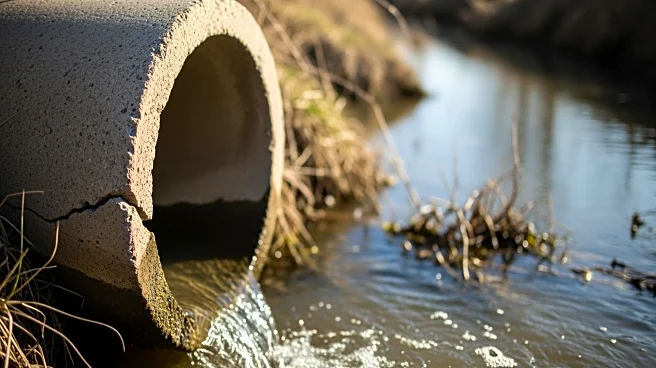
A recent survey conducted by the Water Community Action Network (WaterCAN) reveals that 66% of water sources tested in South Africa are unsafe for human consumption due to contamination from poorly treated sewage and failing wastewater systems. The survey involved
community volunteers using water testing kits to sample various water sources across all nine provinces. The results showed high levels of coliform bacteria and Escherichia coli, indicating significant faecal contamination. This poses immediate health threats and highlights the inadequacy of current wastewater treatment facilities. The findings have been verified by Prof. Anja du Plessis, a water management expert, who emphasizes the discrepancy between official reports and the actual water quality.
Why It's Important?
The contamination of water sources in South Africa has severe implications for public health and agriculture. Unsafe water can lead to outbreaks of waterborne diseases, affecting communities reliant on these sources for drinking and irrigation. The agricultural sector is particularly vulnerable, as contaminated water used for irrigation can transfer harmful bacteria to crops, posing risks to food safety and public health. The situation underscores the urgent need for improved wastewater management and infrastructure investment to ensure safe water access. Failure to address these issues could lead to long-term health crises and economic challenges, particularly in rural and underserved areas.
What's Next?
In response to the alarming findings, there is a call for immediate action from municipal and provincial authorities to improve water quality monitoring and management. This includes routine testing, transparent reporting, and emergency measures to provide safe water to affected communities. There is also a need for increased public awareness about the risks of consuming contaminated water. Long-term solutions will require significant investment in upgrading wastewater treatment facilities and infrastructure to prevent future contamination. Collaboration between government agencies, non-profits, and local communities will be essential to address these challenges effectively.