

What's Happening?
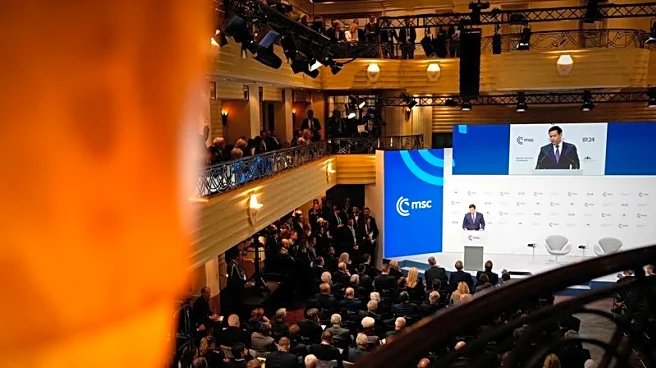
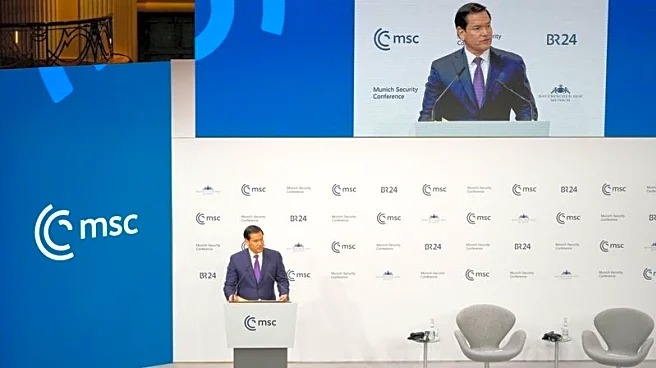
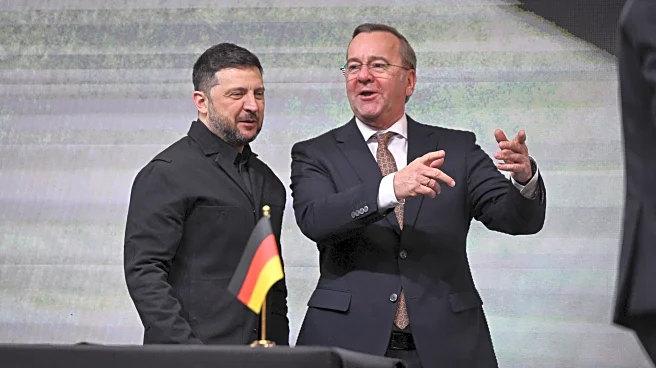
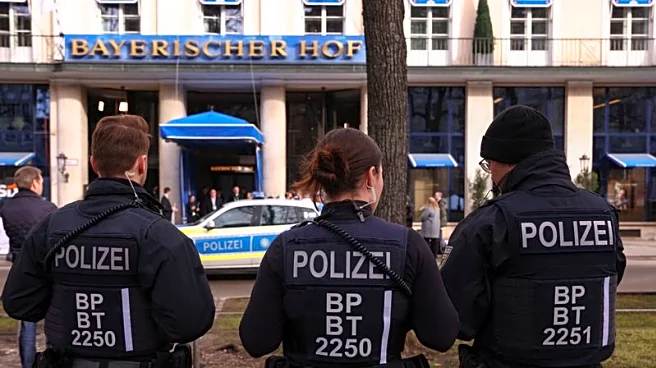
At the Munich Security Conference, Ukrainian President Volodymyr Zelensky called for expedited delivery of weapons from Western allies to counter Russian aggression. He emphasized the urgent need for anti-aircraft missiles to protect Ukraine's power supply
during the harsh winter. NATO Secretary-General Mark Rutte supported Zelensky's appeal, highlighting the importance of maintaining Ukraine's defense capabilities. The conference also saw discussions on Europe's need to enhance its defense capabilities in response to Russian threats. Zelensky warned that Russian President Vladimir Putin's ambitions could extend beyond Ukraine, urging European nations to bolster their defenses.
Why It's Important?
Zelensky's appeal for faster weapon deliveries underscores the ongoing security challenges faced by Ukraine and the broader implications for European stability. The conflict has strained international relations and highlighted the need for a coordinated response to Russian aggression. The discussions at the Munich Security Conference reflect a growing consensus among European leaders on the importance of strengthening defense capabilities. The situation also raises questions about the role of the U.S. and NATO in supporting Ukraine and deterring further Russian expansion. The outcome of these discussions could shape future military and diplomatic strategies in the region.
What's Next?
The upcoming peace talks in Geneva, involving Russian, Ukrainian, and U.S. representatives, are a critical step in seeking a resolution to the conflict. The talks will focus on potential concessions and security guarantees, with the aim of achieving a ceasefire and paving the way for elections in Ukraine. The international community will be closely monitoring the negotiations, as their outcome could influence future diplomatic and military actions. Additionally, European nations may need to reassess their defense strategies and increase military spending to address the evolving security landscape.