







What's Happening?
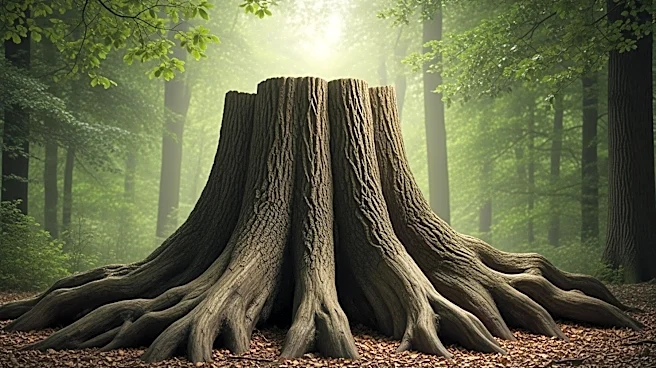
The Major Oak, a 1,200-year-old tree in Sherwood Forest, believed to have sheltered the legendary Robin Hood, has died. The Royal Society for the Protection of Birds (RSPB) announced that the tree failed to sprout leaves this spring, marking its death.
The tree's demise is attributed to soil compaction from centuries of visitors, which hindered water absorption, and possibly climate change effects like heatwaves and droughts. The Major Oak, named after Major Hayman Rooke in 1790, has been a significant tourist attraction and a symbol of British folklore.
Why It's Important?
The death of the Major Oak is significant as it represents the loss of a cultural and historical icon linked to the Robin Hood legend. The tree's decline highlights the broader environmental challenges faced by ancient trees, including the impact of tourism and climate change. The Major Oak's death underscores the need for conservation efforts to protect such natural monuments, which play a crucial role in local ecosystems and cultural heritage. The event may prompt increased awareness and action towards preserving other ancient trees and natural sites.
What's Next?
The Major Oak will remain in Sherwood Forest as a natural monument and habitat for wildlife. Conservationists may focus on preserving the forest's remaining ancient trees and addressing the environmental factors that contributed to the Major Oak's decline. The event could lead to discussions on sustainable tourism practices to prevent similar occurrences in other natural sites. Additionally, saplings from the Major Oak have been planted worldwide, ensuring its legacy continues.
Beyond the Headlines
The death of the Major Oak raises questions about the balance between tourism and conservation. While the tree attracted millions of visitors, the resulting soil compaction contributed to its decline. This situation highlights the need for sustainable tourism practices that protect natural sites while allowing public access. The event also emphasizes the importance of addressing climate change, as extreme weather conditions have been linked to the tree's deterioration. The Major Oak's story may inspire further research and initiatives to safeguard other ancient trees and their ecosystems.