



What's Happening?
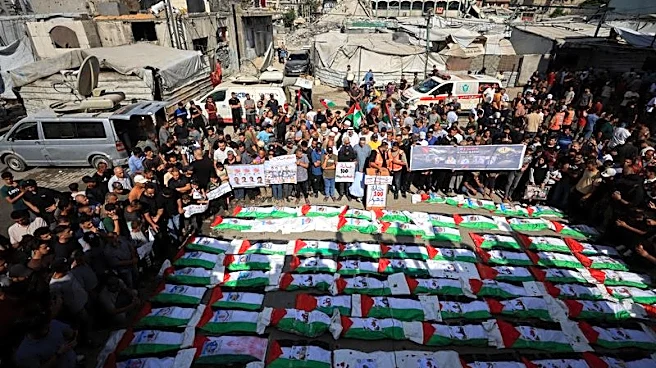
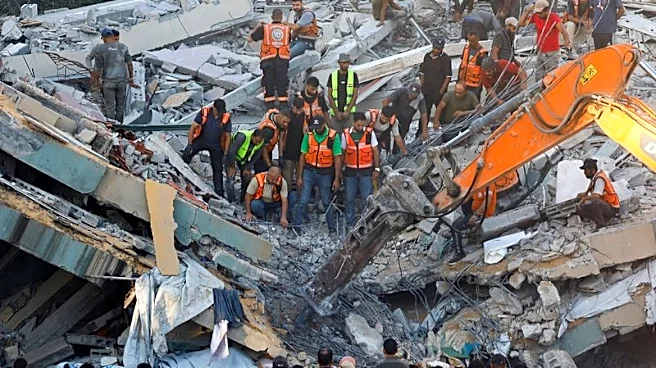
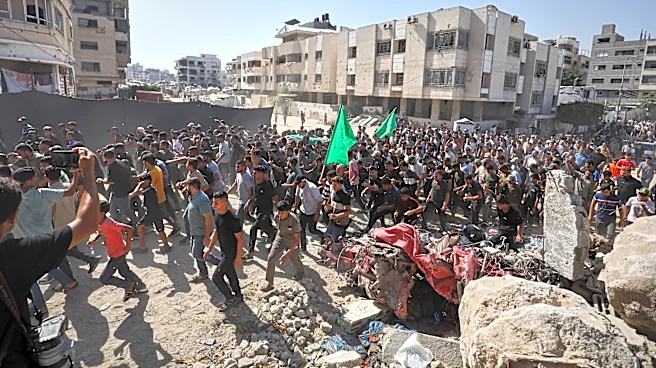
In Gaza, journalists are facing significant challenges in documenting the ongoing conflict, including severe shortages of cameras, spare parts, and electricity. Amid these difficulties, camera repairman Mohammed Radwan is playing a crucial role by keeping
damaged equipment in use. His efforts enable journalists to continue their work, which involves documenting the war. The situation highlights the extreme conditions under which journalists in Gaza are operating, where access to essential tools and resources is severely limited. Radwan's work is vital for maintaining the flow of information from the region, as it directly addresses the practical obstacles faced by media professionals on the ground.
Why It's Important?
The work of Mohammed Radwan is important because it directly supports the continuation of journalistic efforts in a conflict zone where information dissemination is critical. In environments with severe resource constraints, the ability to repair and maintain essential equipment like cameras can mean the difference between a story being told or remaining untold. This directly impacts the global understanding of events unfolding in Gaza. Journalists rely on functional equipment to capture images and videos, which serve as primary evidence and powerful narratives. Without individuals like Radwan, the capacity of local and international media to report from the ground would be further diminished, potentially leading to information vacuums and a less complete picture of the humanitarian and political situation. His role underscores the often-overlooked logistical support necessary for independent reporting.
What's Next?
The ongoing conflict in Gaza suggests that the challenges faced by journalists, including equipment shortages and risks to their lives, will likely persist. The demand for services provided by individuals like Mohammed Radwan is expected to remain high as long as the conflict continues and access to new equipment and spare parts remains restricted. International press freedom organizations and humanitarian groups may continue to highlight the plight of journalists in Gaza and advocate for better access to resources and protection. There could also be increased efforts to provide support, such as funding for equipment repair or direct aid to journalists, to ensure that reporting from the region can continue despite the severe operational difficulties. The long-term impact on local journalism infrastructure will depend on the duration and intensity of the conflict and the subsequent recovery efforts.
Beyond the Headlines
Mohammed Radwan's role as a camera repairman in Gaza transcends a simple technical service; it embodies the resilience and determination of individuals to uphold the right to information in the face of extreme adversity. His work highlights the often-invisible infrastructure that supports journalism in conflict zones, where every piece of equipment becomes a lifeline for reporting. This situation also brings to light the ethical considerations for international media organizations and governments regarding their responsibility to support independent journalism in such challenging environments. The ability of local journalists to document events is crucial for historical record-keeping and accountability, making Radwan's contributions not just practical but also symbolically significant in the broader struggle for truth and transparency. His efforts underscore the human element in maintaining the flow of information, even when systemic support is lacking.