
What's Happening?
A previously unknown species of deep-sea squid has been observed exhibiting a unique behavior by burying itself upside down in the seafloor mud. This discovery was made during a study in the Clarion-Clipperton
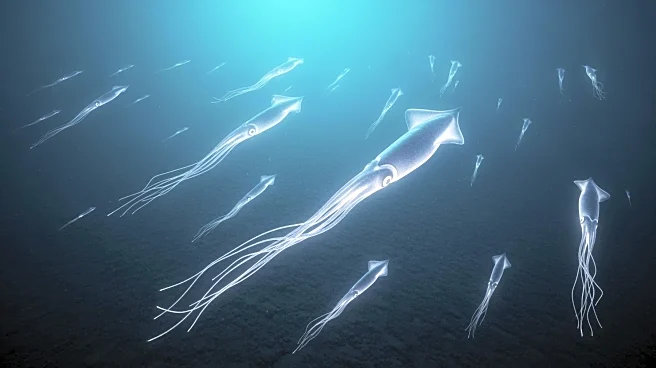
Zone (CCZ), a region in the Pacific Ocean that is being considered for deep-sea mining. The squid, identified as a potential new species of whiplash squid, was found at a depth of approximately 13,450 feet. It was seen with its body buried in sediment, leaving only its siphon and two long tentacles visible above the seafloor. This behavior, described as novel and puzzling by lead author Alejandra Mejía-Saenz, has not been documented in any cephalopods before. The squid's actions are thought to be a form of camouflage, possibly to avoid predators or to ambush prey by mimicking the appearance of glass sponges or tube worms.
Why It's Important?
The discovery of this squid's behavior highlights the vast unknowns of deep-sea ecosystems, particularly in areas like the CCZ, which are under consideration for resource extraction. Understanding the biodiversity and behaviors of species in these regions is crucial, as deep-sea mining could disrupt these habitats. The squid's behavior suggests complex survival strategies that could be impacted by human activities. As the demand for minerals like nickel and cobalt increases, the potential environmental consequences of mining in these areas become a significant concern. This finding underscores the need for comprehensive studies to assess the vulnerability of deep-sea communities to human interventions.
What's Next?
The discovery calls for further research into the behaviors and ecological roles of deep-sea species, particularly in regions targeted for mining. Scientists and environmentalists may advocate for more stringent regulations and assessments before mining activities commence. The findings could influence policy decisions regarding the protection of deep-sea environments and the sustainable management of ocean resources. Ongoing exploration and documentation of deep-sea life are essential to inform these decisions and to ensure that the potential impacts on biodiversity are fully understood.
Beyond the Headlines
This discovery also raises questions about the ethical implications of exploiting deep-sea environments for resources. The unique behaviors and adaptations of deep-sea species like this squid highlight the complexity and fragility of these ecosystems. The potential for undiscovered species and behaviors suggests that our current understanding of deep-sea life is limited, and that further exploration could reveal more about the intricate balance of these habitats. The ethical considerations of disturbing such environments for economic gain must be weighed against the need for resources, prompting a broader discussion on sustainable practices and conservation priorities.