





What's Happening?
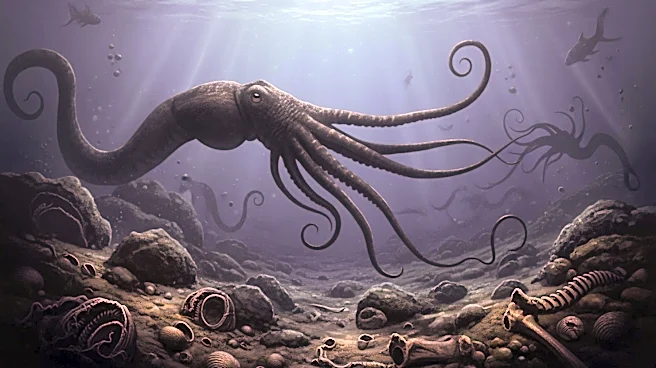
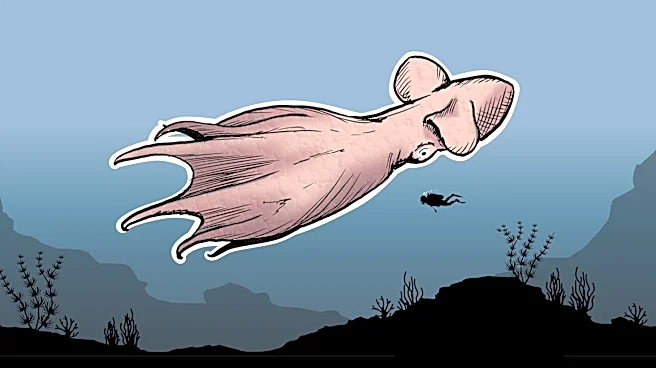
Scientists have uncovered fossilized jawbones of Nanaimoteuthis haggarti, a massive, kraken-like octopus that lived about 72 million years ago. According to a study published in the journal Science, these cephalopods were among the largest marine creatures
of the Cretaceous Period and might have been the largest invertebrates ever. The discovery was made in Japan's Yezo Group and Canada's Nanaimo Group geological formations. Researchers identified 12 additional fossil jaws and examined 15 previously found ones, dividing the creatures into two species based on size and form. The study suggests that these giant invertebrates occupied the top of the food web, challenging the view of the Cretaceous ocean as dominated only by large vertebrate predators.
Why It's Important?
The discovery of the kraken-like octopus fossils provides new insights into the diversity and complexity of prehistoric marine ecosystems. It challenges the traditional view that top marine predators were exclusively vertebrates, such as plesiosaurs and mosasaurs. The findings suggest that invertebrates played a significant role in the Cretaceous food web, indicating a more complex ecosystem than previously thought. This research enhances our understanding of marine biodiversity and evolutionary history, highlighting the importance of invertebrates in ancient ecosystems. It also underscores the potential for future discoveries that could further reshape our understanding of prehistoric life.