





What's Happening?
Federal, state, local, Tribal, and territorial (SLTT) law enforcement agencies in the U.S. are struggling to effectively counter the growing drone threat at the southwest border, despite recent expansions of counter-drone authority. A bipartisan group
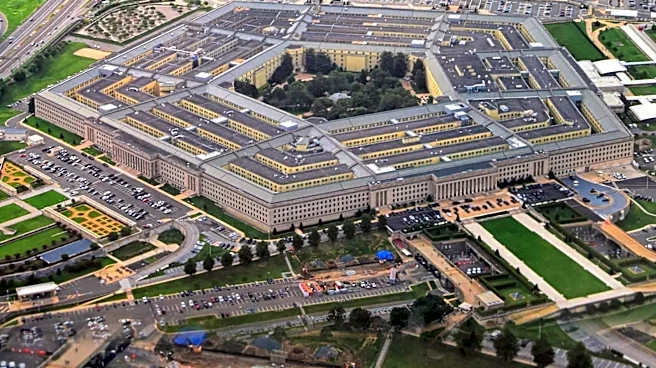
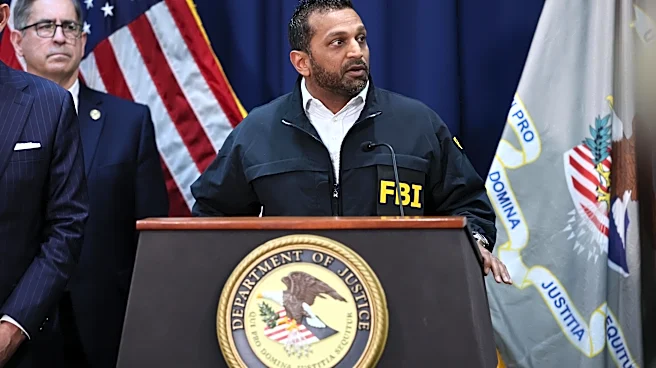
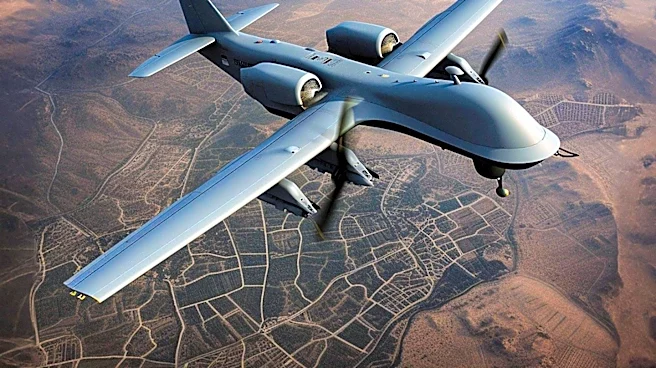
of 29 state governors issued an urgent warning in October 2026 to the Department of Justice (DOJ), the Pentagon, and the FBI, highlighting the lack of trained personnel needed to protect their states from drone incursions. Cartels in Mexico are increasingly using drones for surveillance, smuggling narcotics and migrants, and even weaponizing them with improvised explosive devices. While the Pentagon is preparing for urban drone warfare scenarios, law enforcement on the front lines faces immediate challenges. The Joint Interagency Task Force 401 (JIATF 401), established in 2025, aims to centralize federal counter-drone initiatives and uses the southwest border as a testing ground for defensive technologies. However, the demand for counter-drone support far outstrips current capacity, with the FBI reporting resources to cover only 0.05 percent of potential protection needs for special events since 2018.
Why It's Important?
The struggle of U.S. law enforcement to counter drone threats at the southwest border has significant implications for national security, public safety, and border control. The increasing sophistication and weaponization of cartel drones pose a direct threat to law enforcement personnel, military installations, and civilian communities. The resource and training gaps identified by state governors indicate a critical vulnerability in homeland defense, potentially allowing illicit activities and dangerous attacks to go unchecked. The expansion of counter-drone authority to SLTT law enforcement through the SAFER SKIES Act in December 2025, along with $500 million in federal grant funding, was intended to address these gaps. However, the effectiveness of these measures is uncertain, and the temporary nature of the authority (through December 2031) creates regulatory instability. The involvement of the U.S. military, while providing cutting-edge tools, raises questions about the long-term sustainability of law enforcement capacity versus military substitution.
What's Next?
Policymakers are urged to assess seven key metrics to accurately evaluate law enforcement readiness: force readiness, operational impact, resource demand, fulfillment efficiency, threat baseline, legal enforcement, and financial efficiency. This assessment will help identify persistent resource gaps and inform future strategies. The U.S. military's upcoming Falcon Peak exercise, simulating a populated civilian setting, will provide insights into how the military plans to operate within domestic constraints and support law enforcement. There is also a growing discussion about whether private organizations, such as NFL teams, should assume more financial and technological burden for counter-drone operations, potentially freeing up public funds. However, this raises questions about equitable protection for less-funded venues and critical infrastructure. The diplomatic tension with Mexico regarding U.S. military presence along the border also remains a critical factor, as both nations seek to address the cross-border drone threat.
Beyond the Headlines
The evolving drone threat at the U.S. southwest border highlights complex legal and ethical challenges. Counter-drone modalities, including kinetic methods, electronic hijacking, and directed-energy attacks, carry risks such as collateral damage, risks to civilian aviation, and constitutional infringements. Electronic interception without a warrant directly implicates Fourth Amendment privacy rights, while physical seizure or destruction of private property raises Fifth Amendment due process concerns. Additionally, some drone operators have claimed First Amendment violations when arrested for filming law enforcement. The Federal Aviation Administration's year-long temporary flight restriction (TFR) along the southwest border, while aimed at cartels, also impacts legitimate drone operations, affecting agriculture, infrastructure inspection, and newsgathering. This situation underscores the need for a comprehensive legal framework that balances national security with civil liberties and economic interests, ensuring that counter-drone measures are both effective and constitutionally sound.