
What's Happening?
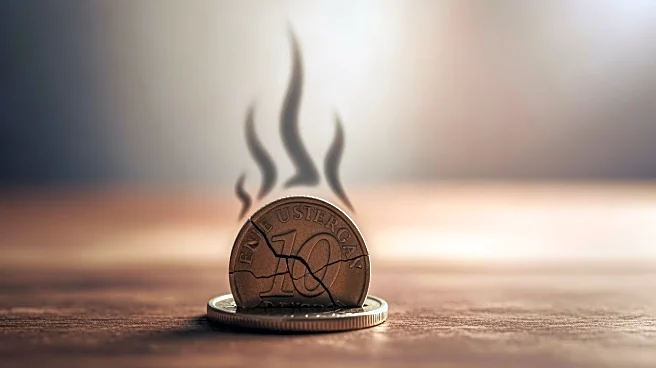
Iran's currency, the rial, has fallen to a new record low of over 1.3 million to the U.S. dollar, exacerbating inflationary pressures and raising fears of higher food prices. The rapid depreciation follows
a recent gasoline price adjustment and ongoing international sanctions. The rial's decline is linked to stalled negotiations between Washington and Tehran over Iran's nuclear program and the potential for renewed conflict in the region. The economic situation is further strained by the U.S.'s 'maximum pressure' campaign, which has expanded sanctions targeting Iran's financial sector and energy exports. The currency's fall is expected to increase the cost of food and other necessities, impacting household budgets across Iran.
Why It's Important?
The plummeting value of the rial highlights the severe economic challenges facing Iran, driven by international sanctions and geopolitical tensions. The currency's decline is likely to exacerbate inflation, making basic goods less affordable for many Iranians. This situation could lead to increased social unrest, as seen in past protests over economic conditions. The economic instability also complicates diplomatic efforts to resolve tensions between Iran and the U.S., potentially affecting regional stability. The situation underscores the broader impact of international sanctions on national economies and the challenges of balancing geopolitical strategies with humanitarian concerns.
What's Next?
As the rial continues to weaken, Iran may face increased pressure to stabilize its economy and address the rising cost of living. The government may need to implement further economic reforms or seek international assistance to mitigate the impact on its population. The ongoing diplomatic stalemate with the U.S. over the nuclear deal remains a critical factor, with potential implications for regional security and international relations. Observers will be watching for any shifts in policy or negotiations that could alter the current trajectory of Iran's economic and political landscape.