



What's Happening?
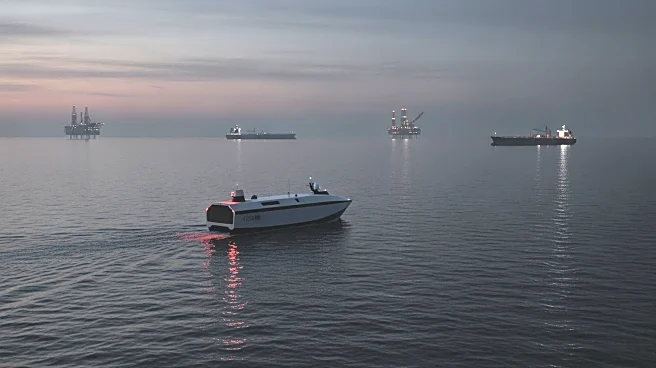
Ukraine has intensified its maritime strategy by deploying sea drones to target Russia's oil export infrastructure in the Black Sea. According to Glen Howard, president of the Saratoga Foundation, these attacks mark a strategic shift from targeting Russian
naval forces to directly impacting the economic lifelines that support Russia's war efforts. The recent drone strikes have focused on disabling offshore loading infrastructure and tankers en route to Novorossiysk, a crucial oil hub. This has led to significant disruptions in Russia's oil export capabilities, forcing the Kremlin to reconsider its defensive strategies. The attacks have rendered several Vapor Processing Units inoperable, creating a bottleneck at Novorossiysk and affecting global oil supplies.
Why It's Important?
The disruption of Russia's oil exports by Ukrainian sea drones has significant geopolitical and economic implications. By targeting the infrastructure that facilitates the movement of sanctioned Russian oil, Ukraine is not only impacting Russia's economy but also challenging its military strategy in the Black Sea. This development could lead to a reevaluation of oil transport routes, with countries like Kazakhstan potentially rerouting oil through alternative pipelines. The situation also highlights the evolving nature of warfare, where unmanned systems are increasingly used to achieve strategic objectives. The pressure on Russia's oil export capabilities could force the Kremlin to allocate more resources to protect its economic interests, potentially affecting its military operations elsewhere.
What's Next?
The ongoing pressure on Russia's oil export infrastructure is likely to continue, with Ukraine potentially increasing the frequency and intensity of its drone attacks. This could lead to further disruptions in global oil supplies and force Russia to enhance its defensive measures in the Black Sea. The situation may also prompt geopolitical shifts, as countries dependent on Russian oil seek alternative sources. Additionally, the international community may need to address the broader implications of using unmanned systems in maritime warfare, as this tactic could become more prevalent in future conflicts.
Beyond the Headlines
The use of sea drones by Ukraine represents a significant evolution in naval warfare, where traditional naval power is challenged by innovative, cost-effective technologies. This shift could influence future military strategies and defense spending, as nations reassess the balance between conventional forces and unmanned systems. The psychological impact of these attacks on Russia's leadership and its population could also play a role in shaping the country's domestic and foreign policies. Furthermore, the environmental risks associated with targeting oil tankers, even when empty, highlight the need for careful consideration of the potential consequences of such military actions.