





What's Happening?
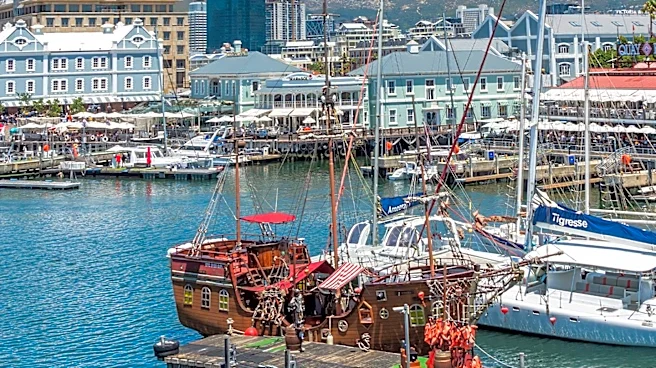
The Victoria & Alfred Waterfront in Cape Town, South Africa, has undergone a significant transformation from an industrial dockyard into a vibrant mixed-use quarter. This historic harbor area, named after Queen Victoria and her son Prince Alfred, features
nineteenth-century basins and brick warehouses set against the backdrop of Table Mountain and Table Bay. The redevelopment, initiated in November 1988 with the establishment of Victoria & Alfred Waterfront (Pty) Ltd, aimed to convert the old docklands into a hub for retail, tourism, residential buildings, and offices, while maintaining a functional harbor. Early projects included converting a 1904 coal store and customs baggage warehouse into the Victoria & Alfred Hotel and Alfred Mall, setting a precedent for adaptive reuse. The area now combines late Victorian brick warehouses with modern commercial buildings, all oriented towards the water, and includes landmarks like the Clock Tower and Time Ball Tower.
Why It's Important?
The transformation of the Victoria & Alfred Waterfront serves as a significant case study in urban regeneration and the economic impact of repurposing historical industrial sites. By converting a neglected dockyard into a thriving commercial and tourist destination, Cape Town has created a major economic engine, attracting both local and international visitors. This development has generated jobs, boosted the local economy through retail and tourism, and preserved a crucial part of the city's maritime heritage. The blend of historical architecture with modern amenities creates a unique cultural and economic landscape. The success of this project demonstrates how strategic urban planning can leverage historical assets to foster economic growth and enhance a city's global appeal, providing a model for other cities looking to revitalize their waterfronts.
What's Next?
The Victoria & Alfred Waterfront is expected to continue its role as a major economic and cultural hub in Cape Town. Ongoing efforts will likely focus on maintaining the balance between its historical character and modern commercial demands, potentially through further adaptive reuse projects and enhancements to public spaces. The area will continue to attract tourists and residents, necessitating continuous management of infrastructure and services to accommodate growth. Future developments might explore integrating more sustainable practices and expanding cultural offerings to further enrich the visitor experience. The success of the Waterfront will also likely influence future urban development strategies in Cape Town, encouraging similar projects that blend heritage preservation with economic innovation.
Beyond the Headlines
Beyond its economic success, the Victoria & Alfred Waterfront embodies a deeper cultural significance by preserving and celebrating Cape Town's maritime history. The transformation from an industrial site to a public space allows residents and visitors to connect with the city's past while engaging with its present. This project highlights the importance of urban design that respects historical context while fostering contemporary life. It also raises questions about the role of such developments in shaping a city's identity and its relationship with its natural environment, particularly with iconic backdrops like Table Mountain. The Waterfront's ability to integrate a working harbor with diverse commercial and leisure activities offers a blueprint for creating dynamic urban environments that are both economically viable and culturally rich, fostering a sense of place and community.