






What's Happening?
Ukraine is actively seeking a new diplomatic arrangement to establish a secure grain corridor in the Black Sea, following increased Russian attacks on commercial vessels and port infrastructure. This initiative comes after Russia withdrew from the Black Sea Grain
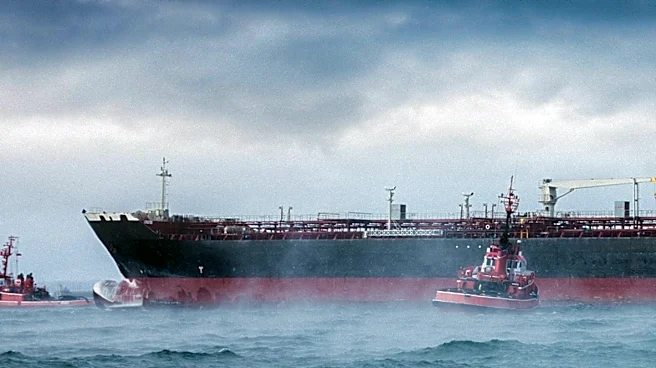
Initiative in July 2023, which had facilitated the safe transport of nearly 33 million tonnes of food. The proposed new arrangement aims to provide reciprocal assurances for vessels sailing under the flags of participating countries, protecting ships traveling to both Ukrainian and Russian ports from attacks, according to Ukrainian President Volodymyr Zelenskyy. The involvement of Turkey, India, and Egypt highlights the international significance of maintaining food shipments through this critical waterway. The previous agreement, brokered by the United Nations and Turkey, demonstrated the scale of trade a renewed agreement could support. However, a Russian diplomat has stated there is no prospect of reviving the 'grain deal,' indicating significant diplomatic hurdles.
Why It's Important?
The disruption of Black Sea shipping routes has profound implications for global food security and international trade. Ukraine is a major agricultural exporter, and its inability to utilize its Black Sea ports at full capacity forces buyers to seek alternative, often more expensive, sources. This situation drives up global wheat prices and increases transportation and insurance costs for commercial vessels. Countries like Egypt, a significant wheat importer, and others such as Turkey and Bangladesh, are particularly vulnerable to these supply chain disruptions. Domestically, a prolonged interruption to maritime trade severely impacts Ukraine's economy, reducing income for producers and foreign-currency revenue, and straining related industries and employment. The ongoing attacks represent a 'gray zone' conflict tactic, aiming to impose economic costs and disrupt Ukraine's ability to sustain itself, without necessarily triggering direct military responses from NATO members.
What's Next?
The proposed corridor remains a diplomatic initiative, with its implementation dependent on the ability of parties to cooperate despite Russian pressure and to establish credible guarantees for civilian vessels. Kyiv is also seeking support from the European Union to revive its 'Solidarity Lanes,' which offer an alternative for Ukrainian exports via European roads, railways, and ports, though these cannot fully replace the capacity of Black Sea shipping. NATO is planning to increase aerial surveillance in the Black Sea region, deploying additional maritime patrol aircraft, drones, and electronic warfare systems to monitor the situation. However, a Russian diplomat's recent statement suggests that Moscow currently sees no prospect of reviving the grain deal, indicating that negotiations will likely be protracted and complex. The success of any future arrangement will hinge on addressing Russia's concerns regarding commercial access for its own agricultural exports and establishing robust verification mechanisms.
Beyond the Headlines
The situation in the Black Sea transcends immediate economic and geopolitical concerns, highlighting the evolving nature of modern warfare, characterized by 'gray zone' tactics. Russia's actions, including drone attacks and targeting of commercial shipping in international waters, aim to create a de facto blockade by making the region too risky and expensive for commercial operations, without a formal declaration of war. This strategy exploits the reluctance of international actors to escalate conflicts, pushing the boundaries of international law and maritime security. The rising war-risk insurance premiums, now double those in the Persian Gulf, illustrate how market forces can be weaponized to achieve strategic objectives. The long-term implications include a potential re-evaluation of international maritime law and security protocols in conflict zones, as well as increased pressure on global institutions to develop more effective mechanisms for protecting civilian shipping in contested areas.