







What's Happening?
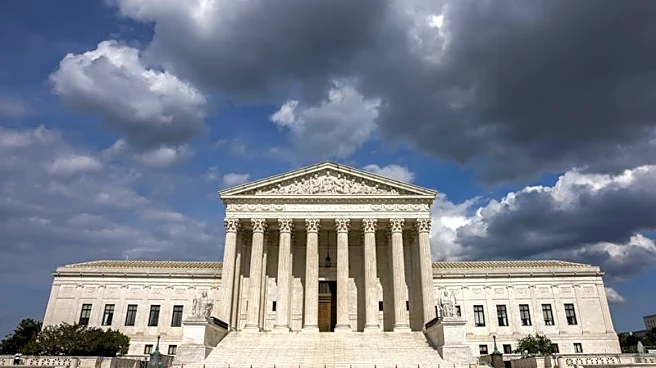
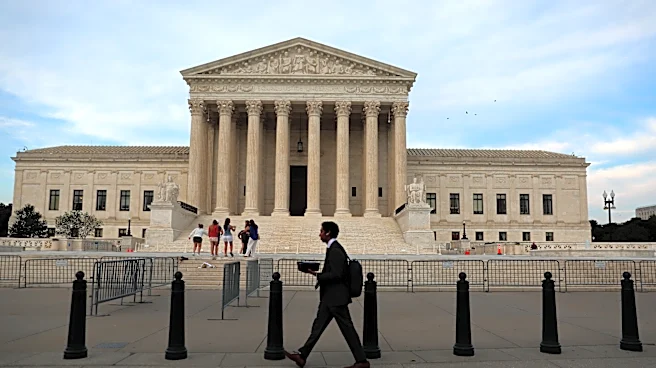
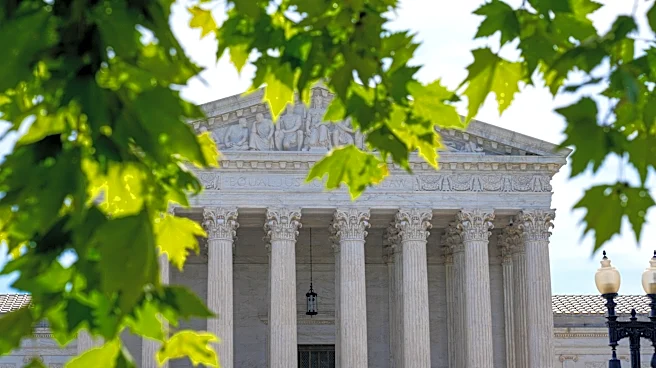
The Supreme Court has ruled that constitutional privacy protections extend to cellphone location information, marking a significant decision in the case of a bank robber identified through a geofence warrant. Justice Elena Kagan, writing for the 6-3 majority,
emphasized that cellphone users do not forfeit their privacy expectations by opting into location history services like Google's. The case involved Okello Chatrie, whose location data was used to link him to a bank robbery in Virginia. The court's decision underscores the application of constitutional privacy rights to modern technology, a challenge given the framers of the Constitution could not have foreseen such advancements. The ruling sends the case back to a lower court for further proceedings, as the Supreme Court did not decide on the Fourth Amendment compliance of the search.
Why It's Important?
This ruling is pivotal as it sets a precedent for how privacy rights are interpreted in the context of modern technology. By extending privacy protections to cellphone location data, the Supreme Court has reinforced the notion that digital privacy is a constitutional right. This decision could impact law enforcement practices, particularly the use of geofence warrants, which have been criticized for potentially infringing on privacy rights. The ruling may lead to stricter guidelines and limitations on how such data can be accessed and used by authorities, affecting both legal standards and the tech industry’s handling of user data.
What's Next?
The case will return to a lower court to determine if the search violated the Fourth Amendment, which could further clarify the legal standards for using geofence warrants. This decision may prompt legislative action to address privacy concerns related to digital data. Additionally, tech companies might face increased pressure to enhance privacy protections and transparency regarding data collection and sharing practices. Law enforcement agencies will likely need to adapt their investigative techniques to comply with the new legal landscape.