



What's Happening?
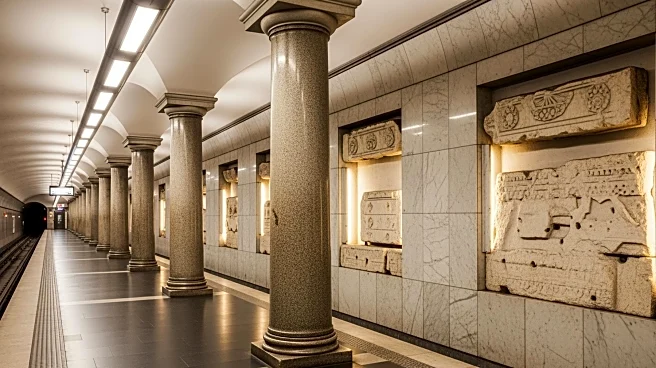
Rome has inaugurated a new metro station near the Colosseum, revealing a trove of archaeological treasures discovered during its 11-year construction. The station, part of the city's C line, features artifacts such as ceramic fragments, statues, and ancient
wells, offering a glimpse into Rome's rich history. The project, led by the Italian construction group Webuild, faced challenges due to the city's dense historical layers and groundwater issues. The station's opening coincides with another at Porta Metronia, which also showcases significant archaeological finds, including a second-century military barracks. These developments are part of Rome's ongoing efforts to modernize its transit system while preserving its historical heritage.
Why It's Important?
The opening of the new Colosseum metro station is a significant milestone in Rome's efforts to balance modern infrastructure development with historical preservation. By integrating archaeological discoveries into the station's design, the project enhances cultural tourism and provides educational opportunities for visitors and residents. This approach reflects a growing trend in urban planning where cities like Rome, Thessaloniki, and Xi'an incorporate historical artifacts into public spaces, enriching the cultural landscape. The station's development also addresses practical needs by reducing traffic congestion in a busy area, improving public transportation access, and supporting the city's economic growth through increased tourism.
What's Next?
Rome plans to continue expanding its metro system with future stations at Piazza Venezia and near St. Peter's Basilica, expected to open by 2033. These projects will likely encounter similar challenges and opportunities for archaeological discoveries. The city aims to further integrate historical preservation with urban development, potentially setting a precedent for other cities with rich historical backgrounds. As these projects progress, they may attract international attention and collaboration, fostering a global dialogue on sustainable urban development and heritage conservation.