



What's Happening?
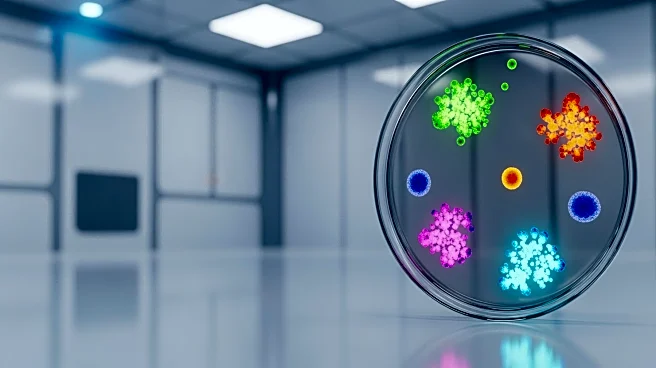
Scientists have discovered 26 new bacterial species in NASA's cleanrooms at the Kennedy Space Center in Florida. These cleanrooms, known for their stringent sterilization protocols, are designed to prevent Earth microbes from contaminating other planets.
Despite these measures, the newly identified bacteria have evolved genetic adaptations that allow them to survive harsh cleaning chemicals and nutrient-scarce environments. The discovery was made during the assembly of the Phoenix Mars Lander in 2007, and the findings were published in the journal Microbiome. Researchers are now planning to test these bacteria in a planetary simulation chamber to assess their ability to survive space travel and potential contamination of Mars.
Why It's Important?
The discovery of these resilient bacteria in NASA's cleanrooms highlights potential vulnerabilities in current planetary protection protocols. If these microbes can survive the sterilization processes, they might also withstand the conditions of space travel, posing a risk of contaminating other planets, such as Mars. This could have significant implications for astrobiology and the search for extraterrestrial life, as Earth microbes could interfere with the detection of native Martian life forms. The findings underscore the need for improved decontamination methods to ensure the integrity of future space missions.
What's Next?
Researchers are constructing a planetary simulation chamber to expose the newly discovered bacteria to Mars-like conditions, including low air pressure, high radiation, and extreme temperature fluctuations. These experiments, set to begin in early 2026, aim to determine the bacteria's survival capabilities in space-like environments. The results could inform the development of more effective sterilization techniques for spacecraft, ensuring that future missions do not inadvertently transport Earth life to other planets.