




What's Happening?
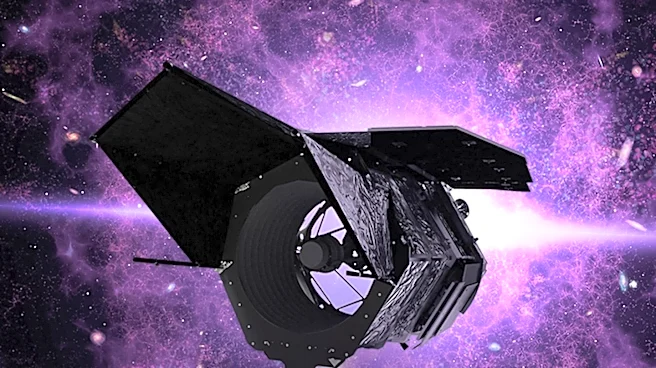
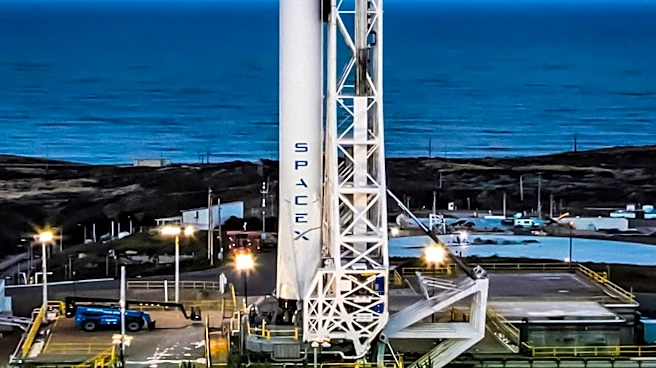
NASA's Nancy Grace Roman Space Telescope is scheduled to launch on August 30, 2026, aboard a SpaceX Falcon Heavy rocket. Named after NASA's first chief astronomer, Nancy Grace Roman, the telescope aims to study dark energy, dark matter, and discover new
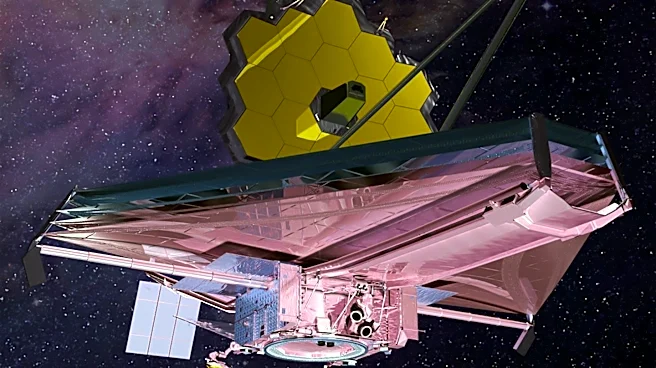
cosmic phenomena. It is equipped with a 300-megapixel infrared camera and a wide field of view, allowing it to image over 50 times more sky than the Hubble Space Telescope covered in 30 years. The Roman telescope will travel nearly 1 million miles from Earth to the same orbital 'sweet spot' as NASA's James Webb Space Telescope. During its first five years, it is expected to generate over 500 terabytes of cosmic data per year, significantly more than Hubble's total of 400 terabytes in its 35 years of service.
Why It's Important?
The Roman Space Telescope represents a significant advancement in astronomical research capabilities. By capturing a vast amount of data, it will enable scientists to explore fundamental questions about the universe, such as the nature of dark energy and dark matter. The telescope's ability to image large portions of the sky will facilitate the discovery of new cosmic phenomena and enhance our understanding of the universe's structure. This mission underscores NASA's commitment to advancing space exploration and scientific discovery, potentially leading to breakthroughs in our understanding of the cosmos.
What's Next?
Following its launch, the Roman Space Telescope will spend approximately three months traveling to its designated orbit. Once operational, it will begin its extensive survey of the universe, with data being downlinked to ground stations in New Mexico, Australia, and Japan. NASA plans to release the data to the public as soon as it is processed, allowing multiple research teams to analyze it simultaneously. This collaborative approach is expected to accelerate scientific discoveries and foster international cooperation in space research.