






What's Happening?
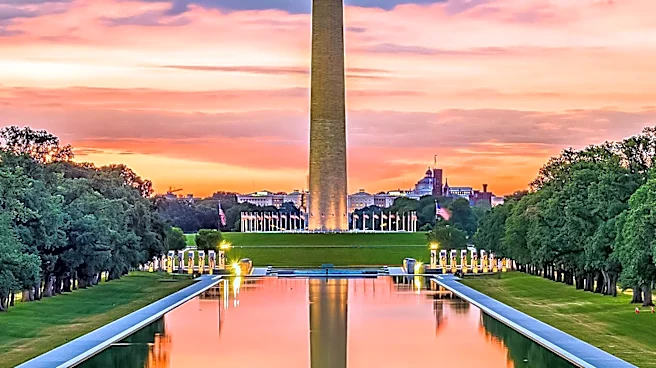
David Hearn, a decorated white-water canoe athlete and former Olympian, has been charged with felony destruction of federal property after allegedly damaging the Reflecting Pool in Washington, D.C. Hearn, who was arrested after reportedly pulling up sealant
from the pool's lining, faces up to 10 years in prison if convicted. His lawyers argue that the charges are frivolous and maintain that photographic evidence will prove Hearn did not cause significant damage. The incident occurred following a renovation ordered by President Trump, which has been criticized for its execution. The case has drawn significant public attention, with supporters rallying behind Hearn, who has a long history of involvement in water sports and environmental activities.
Why It's Important?
The case against David Hearn highlights issues of prosecutorial priorities and the handling of federal property renovations. The Reflecting Pool, a symbol of American heritage, has become a focal point of controversy due to the renovation's alleged mismanagement. The charges against Hearn have sparked debate over the government's response to perceived vandalism versus the accountability of those responsible for the renovation. This case could set a precedent for how similar incidents are prosecuted and may influence public perception of government priorities under President Trump's administration. The outcome could impact Hearn's reputation and the broader community of environmental and sports enthusiasts who view him as a respected figure.
What's Next?
Hearn's legal team is preparing for a trial, with a status hearing scheduled soon. The defense plans to challenge the evidence presented by prosecutors, arguing that the government's actions have compromised the integrity of the case. Public interest in the trial is high, with supporters advocating for Hearn's innocence. The case may also prompt further scrutiny of the Reflecting Pool renovation and its contractors. As the trial progresses, it could lead to broader discussions about federal property management and the balance between security and public access to national landmarks.