







What's Happening?
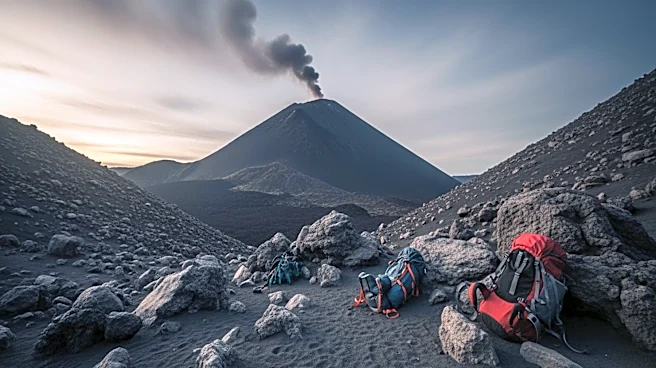
Mount Dukono, an active volcano on Halmahera island in Indonesia, erupted on May 8, 2026, resulting in the deaths of three individuals, including two foreigners. The eruption, which occurred at 07:41 am local time, sent a column of volcanic ash 10 kilometers
into the sky. The area had been closed to visitors since April 17 due to increased volcanic activity. Despite this, 20 hikers were on the mountain at the time of the eruption, prompting Indonesian authorities to launch a rescue mission. The local rescue agency, led by Iwan Ramdani, has deployed personnel, including police, to search for the missing hikers. Nine of the hikers are reported to be from Singapore. Authorities have issued warnings for residents and tourists to maintain a safe distance from the Malupang Warirang crater, the center of volcanic activity.
Why It's Important?
The eruption of Mount Dukono highlights the ongoing risks associated with Indonesia's numerous active volcanoes, which are part of the Pacific 'Ring of Fire.' The incident underscores the importance of adhering to safety warnings and the challenges faced by authorities in managing natural disasters. The eruption has potential implications for local tourism, as the area is a popular destination for hikers and adventure seekers. The fatalities and missing persons also raise concerns about the safety measures in place for tourists and the effectiveness of communication regarding volcanic activity alerts. The situation may prompt a review of disaster preparedness and response strategies in the region.
What's Next?
Rescue operations are ongoing to locate the missing hikers, with authorities focusing on ensuring the safety of those in the vicinity of the volcano. The government may consider implementing stricter regulations and monitoring systems to prevent unauthorized access to hazardous areas. Additionally, there may be increased efforts to educate both locals and tourists about the dangers of volcanic activity and the importance of heeding official warnings. The incident could lead to a reassessment of emergency response protocols and collaboration between local and national agencies to enhance disaster management capabilities.