

What's Happening?
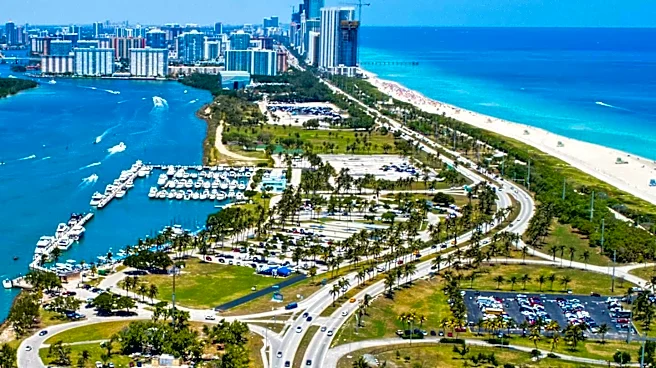
A recent study highlights a significant increase in the number of days exceeding 90°F in over 30 U.S. cities, including Miami and Houston, compared to 1970. This rise in extreme heat days is attributed to climate change and poses challenges for infrastructure,
health, and agriculture. Cities like Tucson are implementing measures such as cooling centers and building code changes to mitigate the effects. The study, published in JAMA, reports a 117% increase in heat-related deaths in the U.S. since the late 20th century. Infrastructure, designed for cooler climates, is under strain, with heat causing issues like rail track expansion and bridge malfunctions.
Why It's Important?
The increase in extreme heat days has broad implications for public health, infrastructure, and the economy. Heat-related illnesses and deaths are rising, stressing healthcare systems. Infrastructure not designed for such temperatures faces increased maintenance costs and potential failures, affecting transportation and logistics. The agricultural sector is also at risk, with crops suffering from heat stress, potentially leading to reduced yields and higher food prices. These challenges necessitate urgent adaptation and mitigation strategies to protect public health and economic stability.
What's Next?
Cities are likely to continue developing and implementing strategies to cope with rising temperatures. This includes enhancing urban planning to incorporate more green spaces, improving building codes for better heat resistance, and expanding public health initiatives to protect vulnerable populations. Policymakers may also push for more aggressive climate action to curb emissions and slow the rate of warming. The effectiveness of these measures will be critical in determining how well cities can adapt to the new climate reality.