






What's Happening?
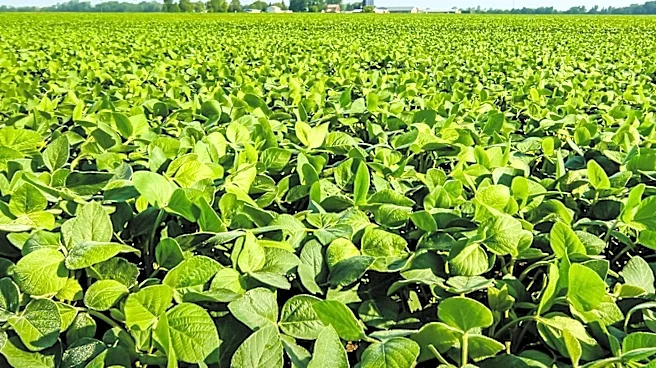
Scientists at the Salk Institute for Biological Studies are developing deeper-rooted soybean plants with the aim of increasing underground carbon storage and improving crop resilience to climate extremes. Research scientist Ashish Rajurkar is involved
in testing these genetically modified plants, which feature roots that grow straight down into the soil, unlike typical soybean plants that spread outwards. This deeper root system is hypothesized to allow plants to access water in lower soil layers during droughts and store more carbon further underground, where it is less susceptible to release through farming practices like tilling. The Salk Institute's Harnessing Plants Initiative, led by Wolfgang Busch, has identified 347 genes related to carbon storage and root growth, enabling scientists to edit plant DNA to achieve these desired traits. An $18 million grant from the Bezos Earth Fund is supporting field tests to evaluate the plants' resilience, carbon storage capacity, and potential for large-scale adoption by farmers.
Why It's Important?
This research holds significant importance for both climate change mitigation and agricultural sustainability in the U.S. and globally. By enhancing the ability of common crops like soybeans to store carbon, it offers a natural, scalable solution to remove atmospheric carbon dioxide, a major driver of human-caused climate change. The development of drought-resistant crops is crucial for ensuring food security in the face of increasingly unpredictable weather patterns and climate extremes, which threaten agricultural yields. If successful, these deeper-rooted soybeans could provide a dual benefit: reducing greenhouse gas levels and stabilizing crop production for farmers. The potential for these plants to absorb more nitrogen and other fertilizer runoff could also mitigate environmental issues such as algae blooms and oxygen-depleted marine environments. This initiative represents a promising intersection of biotechnology and environmental science, offering a new tool in the fight against climate change and its impacts on agriculture.
What's Next?
The next phase of this research involves extensive field testing to validate the effectiveness of deeper-rooted soybeans under real farming conditions. Initial results from field sites in Illinois, Missouri, Kansas, and Iowa are anticipated this fall. Researchers need to demonstrate how much additional carbon these roots can store, how long it remains underground, and whether the crops can maintain or even increase yields. The $18 million grant from the Bezos Earth Fund will facilitate these tests, focusing on plant resilience to drought and other climate stressors. A key challenge will be the rapid adoption of this new seed technology by farmers and large seed companies. Scientists believe that if the technology offers clear benefits, such as increased yields or resilience, it could be adopted quickly, similar to herbicide-resistant crops. A 2025 study co-authored by Wolfgang Busch modeled that widespread adoption of deeper-rooted crops could remove about a gigaton of carbon dioxide per year by 2040.
Beyond the Headlines
Beyond the immediate agricultural and environmental benefits, this research touches upon deeper implications regarding the role of genetic engineering in addressing global challenges. The ability to modify plant genomes for specific environmental outcomes, such as enhanced carbon sequestration, opens new avenues for bio-engineering solutions to climate change. However, it also raises discussions about the acceptance of genetically modified organisms (GMOs) in agriculture and potential ecological impacts. The project's success could shift agricultural practices towards more climate-resilient and carbon-negative approaches, potentially influencing food production systems and land use policies. The collaboration between scientific institutions and philanthropic organizations like the Bezos Earth Fund highlights a growing trend of private funding supporting ambitious climate solutions. This initiative underscores the urgency of finding innovative solutions to climate change, as scientists emphasize that it is a 'race against time' to limit damage and prevent irreversible tipping points.