
What's Happening?
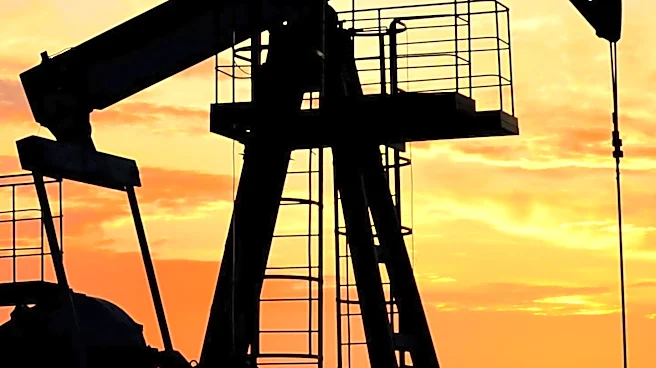
President Claudia Sheinbaum of Mexico has announced the findings of a scientific committee regarding the potential for fracking in the country. The committee, composed of experts from various universities and research institutions, recommended prohibiting
fracking in the Tampico-Misantla basin due to social and environmental concerns. The administration plans to use these recommendations to guide its energy policy on unconventional gas. The committee emphasized the need for scientific backing for any projects and suggested exploring other energy alternatives before resorting to unconventional gas extraction. The government will conduct research wells to assess the presence of saline water, a crucial factor for fracking feasibility. A digital platform will be established to publish all scientific studies and updates on the investigations.
Why It's Important?
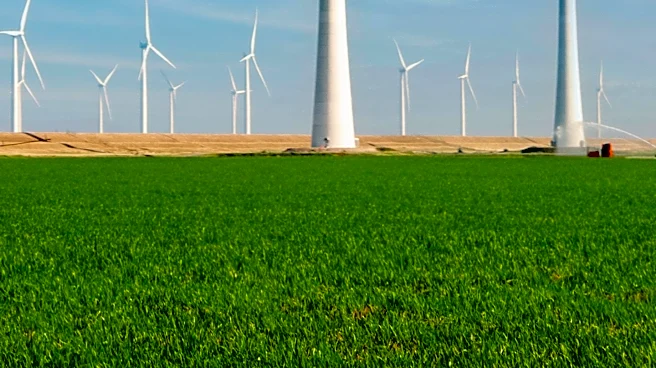
The decision to potentially prohibit fracking in certain areas highlights the Mexican government's cautious approach to energy extraction, balancing economic needs with environmental and social responsibilities. This move could impact Mexico's energy independence, as the country currently imports a significant portion of its gas from the United States. By focusing on renewable energy and efficiency programs, Mexico aims to reduce its reliance on imported gas, although complete energy self-sufficiency remains a challenge. The outcome of this policy could influence international energy markets and set a precedent for other nations grappling with similar environmental and economic considerations.
What's Next?
The next steps involve conducting research to confirm the presence of saline water in potential fracking areas. If saline water is not found, fracking projects will not proceed. The government will also engage in public consultations and maintain regular meetings with the scientific committee to ensure transparency and public involvement in the decision-making process. The administration's approach could lead to increased investment in renewable energy sources and further discussions on energy policy reform.