
What's Happening?
Since January 2025, the Trump administration has systematically driven thousands of national security professionals out of their jobs and implemented measures to silence dissent within the workforce, creating
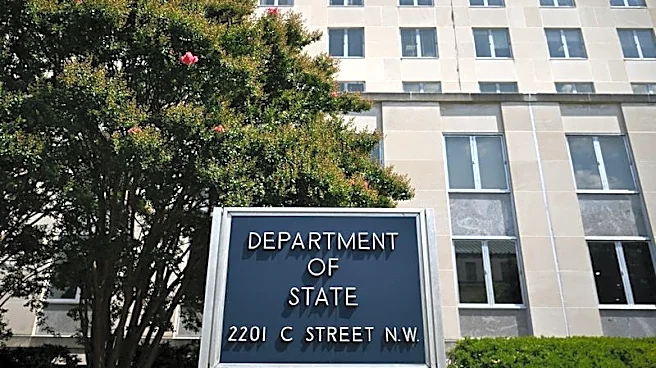
what is described as a 'censorship machine.' This includes targeted cuts, such as 160 detailees from the National Security Council, all six FBI executive assistant directors, and over 1,300 State Department employees, alongside the complete shutdown of USAID. The administration has also fired approximately 25,000 probationary employees in its first two months, with a federal judge later deeming these firings unlawful. Mechanisms to silence include stripping security clearances, implementing new non-disclosure agreements covering nearly all federal employee knowledge, and proposing a suitability rule where refusal to sign is grounds for removal. These actions have created an environment where public servants are deterred from raising concerns internally, leaving for the private sector, or speaking out through civil society, effectively closing all traditional avenues for dissent.
Why It's Important?
This systematic silencing of the national security workforce has profound implications for U.S. national security and democratic governance. By removing experienced professionals and deterring dissent, the administration risks losing critical institutional knowledge, expertise, and diverse perspectives essential for effective policymaking and intelligence analysis. This can lead to flawed decisions, reduced accountability, and a weakened ability to address complex global threats. The erosion of civil service protections and the politicization of national security roles undermine the impartiality and integrity of government institutions. The comparison to the McCarthy era highlights the potential for long-term damage to the federal workforce, where fear of reprisal can stifle truth-telling and critical analysis, ultimately harming the nation's ability to govern effectively and protect its interests.
What's Next?
The article suggests that the 'censorship machine' operates by making truth-telling professionally and financially ruinous, leading to a 'conspiracy of silence.' To counter this, there is a call for institutions that make truth-telling survivable, such as public service fellowships that provide income, health insurance, and platforms for documenting injustices. The Lawfare Public Service Fellowship is cited as one such initiative, aiming to support targeted professionals and preserve expertise for future recovery efforts. The ongoing legal challenges to some of the administration's policies, such as the restoration of a lawyer's security clearance, indicate that some avenues for resistance remain, though they are often protracted and costly. The long-term impact will depend on the ability of civil society and legal mechanisms to protect and empower dissenting voices within the national security community.
Beyond the Headlines
The 'censorship machine' described in the article points to a deeper crisis of trust and accountability within the federal government. The administration's treatment of the national security workforce as an 'enemy within' reflects a broader ideological battle over the role and independence of the civil service. This situation raises fundamental questions about the balance of power between the executive branch and career professionals, and the mechanisms designed to ensure checks and balances. The chilling effect on speech and the suppression of expertise can lead to a government that is less informed, less effective, and more prone to error. The historical parallels to the McCarthy era serve as a stark warning about the potential for such purges to inflict lasting damage on national institutions and the country's ability to navigate complex challenges.