


What's Happening?
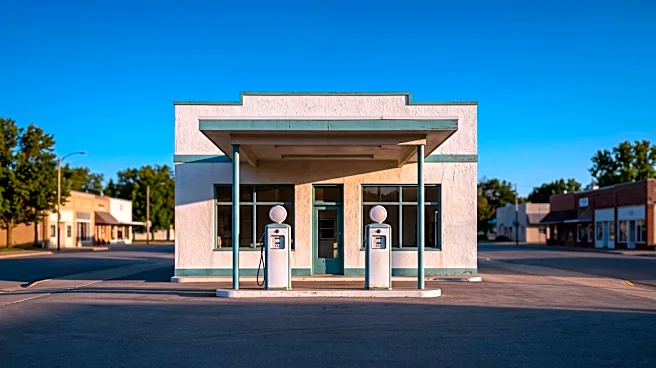
Ron Randall’s Service Station, a landmark on Main Street in Centerville, Utah, faces an uncertain future following the death of its namesake owner, Ron Randall, in June. The property, which has served the community for nearly eight decades and is listed
on the National Register of Historic Places, has been put up for sale by Randall's family. Community members and Randall's granddaughter, Anita Coyle, are expressing hopes that the station's rich history and distinctive retro appearance can be preserved by a new owner. The station, built by Randall and his brother in 1948, has been a fixture in Centerville, known for its vintage gas prices and Randall's constant presence. Despite its historic designation, there are concerns that a new owner could redevelop or demolish the building, erasing a significant piece of local history.
Why It's Important?
The potential loss of Ron Randall’s Service Station highlights a common challenge faced by historic local businesses across the U.S. when their original owners pass away. These establishments often represent more than just commercial enterprises; they are cultural touchstones, embodying community identity and shared history. The station's listing on the National Register of Historic Places underscores its recognized significance, yet this designation alone does not guarantee its physical preservation against redevelopment pressures. This situation reflects the ongoing tension between property rights, economic development, and historical preservation efforts in many American towns. The community's desire to save the station, potentially by transforming it into a soda shop, restaurant, or another automotive business, demonstrates the value residents place on tangible links to their past and the collective memory these places hold.
What's Next?
The immediate next step for Ron Randall’s Service Station is the search for a new owner. The community and Randall's family are actively hoping that the buyer will be someone committed to preserving the structure and its historic character, rather than opting for demolition or complete redevelopment. While the historic designation offers eligibility for preservation grants and incentives, it does not legally prevent a future owner from altering or removing the building. Therefore, the future of the station largely depends on the vision and intentions of the eventual purchaser. Community members are likely to continue advocating for preservation, potentially exploring local initiatives or partnerships to support a sympathetic acquisition and adaptive reuse of the property, ensuring its legacy continues in some form.
Beyond the Headlines
The story of Ron Randall’s Service Station delves into the broader theme of generational change and the fading of local institutions that once anchored American communities. As small, family-owned businesses give way to larger commercial developments or simply cease to exist, towns risk losing their unique character and the informal social networks these places fostered. Randall himself was as much a part of the landmark as the building, symbolizing a bygone era of personal service and community connection. The struggle to preserve the station is not just about a building; it's about retaining a sense of place, continuity, and the stories embedded within the physical landscape. This situation prompts reflection on how communities can proactively protect their heritage and adapt historic structures for modern uses while honoring their past, ensuring that future generations can still connect with the tangible remnants of their local history.