







What's Happening?
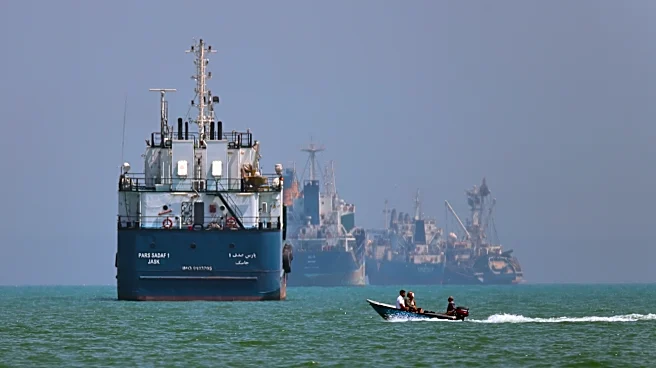
Efforts to clear mines from the Strait of Hormuz are expected to delay the resumption of normal shipping traffic for several weeks. This follows a recent agreement between the U.S. and Iran to reopen the strategic waterway, which has been blocked since
February due to military conflict. The operation involves conventional minesweepers and advanced underwater drones, with estimates suggesting it could take 40 to 50 days to ensure the strait is safe for passage. The blockage has already halted tens of millions of barrels of oil, exacerbating concerns as global oil stockpiles approach critical lows. The U.S. Energy Information Administration has noted that stockpiles in major economies are nearing their lowest levels since 2003. Shipping and maritime security sources emphasize the need for caution, as the threat of mines remains significant.
Why It's Important?
The delay in clearing the Strait of Hormuz has significant implications for global oil markets. The strait is a critical chokepoint, handling about 20% of the world's oil supply. Prolonged disruptions could lead to sustained high oil prices, impacting economies worldwide. The situation highlights the vulnerability of global oil supply chains to geopolitical tensions. Energy executives and stakeholders in the shipping industry are particularly concerned, as the uncertainty affects insurance and shipping operations. The potential for continued volatility in oil markets underscores the need for strategic reserves and alternative supply routes.
What's Next?
The international community is closely monitoring the situation, with France and Britain preparing to lead a mission to support the reopening of the strait. This mission, backed by the Netherlands and Italy, could be deployed within days. Meanwhile, the U.S. military continues efforts to ensure the strait is free of mines, although the exact number and locations of mines remain undisclosed for security reasons. Shipping companies are seeking assurances of safe passage before resuming normal operations. The outcome of these efforts will be crucial in stabilizing oil markets and restoring confidence among global shipping and energy sectors.