



What's Happening?
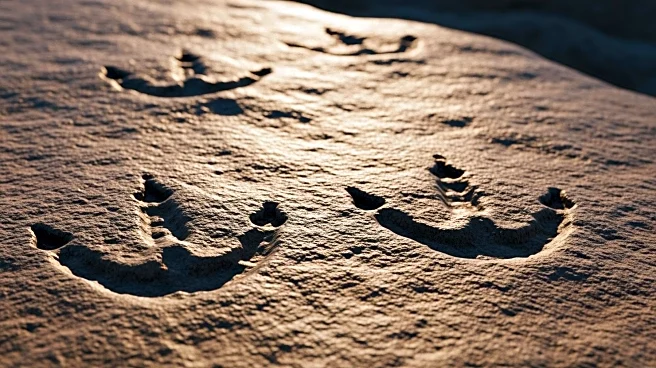
A team of paleontologists from Loma Linda University has documented 16,600 dinosaur footprints in Toro Toro, Bolivia, marking the highest number of theropod footprints recorded globally. These footprints, belonging to the dinosaur group that includes
the Tyrannosaurus rex, were found in the ancient waterways of Toro Toro, a popular national park in the Bolivian Andes. The study, published in the journal PLOS One, highlights the dinosaurs' attempts to swim, as evidenced by 1,378 swim traces. The longest swim trackway measures over 130 meters, the longest of its kind worldwide. The footprints, preserved in excellent condition, provide a unique insight into dinosaur behavior during the Cretaceous period, just before an asteroid impact led to their extinction.
Why It's Important?
This discovery is significant as it offers a rare glimpse into the behaviors and movements of dinosaurs, which are typically inferred from skeletal remains. The abundance of footprints at Toro Toro provides a detailed record of dinosaur activity, including their attempts to swim, which is not commonly observed in fossil records. This site serves as a crucial window into the past, helping scientists understand the environmental conditions and behaviors of dinosaurs before their extinction. The findings also underscore the importance of preserving such sites, as human activities have previously threatened these ancient traces.
What's Next?
Further research is expected to continue at the Toro Toro site, with paleontologists anticipating the discovery of more footprints. This ongoing study will likely enhance understanding of dinosaur migration patterns and behaviors. Conservation efforts are also crucial to protect these footprints from human interference, ensuring that this valuable paleontological site remains intact for future study.
Beyond the Headlines
The discovery raises questions about the reasons behind the dinosaurs' presence in such large numbers at this site. Theories suggest they may have been drawn to a large freshwater lake or were migrating along an ancient coastal route. The lack of skeletal remains in the area, despite the abundance of footprints, suggests that the site was more of a transit point than a settlement area for dinosaurs.