






What's Happening?
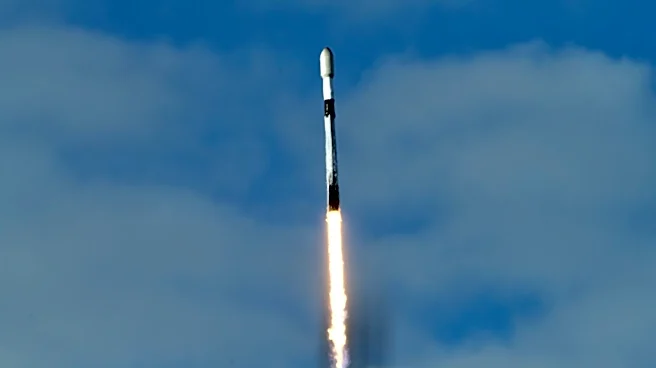
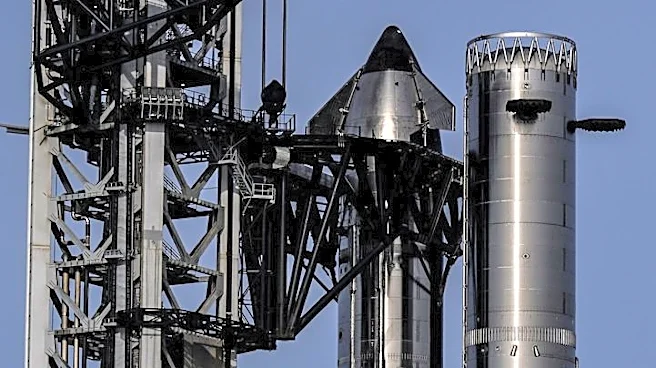
SpaceX successfully conducted the 13th test flight of its Starship rocket, marking the first time the vehicle completed a water landing intact. The flight, which launched from Starbase, Texas, ended with the Starship splashing down in the Indian Ocean
approximately 65 minutes after liftoff. During the mission, SpaceX tested the vehicle under higher dynamic pressure than previous flights, withstanding reentry temperatures exceeding 1,400 degrees Celsius. The Starship remained intact during its descent from over Mach 20 to subsonic speeds. This test flight also saw the deployment of 20 Starlink V3 satellites, marking the first operational payload deployment after several test flights with dummy payloads.
Why It's Important?
The successful water landing of the Starship is a significant milestone for SpaceX, as it demonstrates the vehicle's capability to withstand the rigors of reentry and landing. This achievement is crucial for SpaceX's long-term plans, which include increasing the deployment rate of its Starlink satellite constellation and supporting NASA's Artemis missions to the Moon. The ability to recover and reuse the Starship could lead to reduced launch costs and increased mission frequency, enhancing SpaceX's competitive position in the commercial space industry. Additionally, the deployment of operational Starlink satellites supports SpaceX's goal of providing global internet coverage.
What's Next?
Following the successful test flight, SpaceX plans to attempt a tower catch on the next Starship flight, pending data review. This could pave the way for the first orbital attempt, as no Starship has completed an orbit in the previous 13 flights. SpaceX is also constructing two additional Starship launch pads in Florida to support increased launch activity. The continued development and testing of the Starship are critical for SpaceX's future missions, including lunar landings and potential Mars exploration.