





What's Happening?
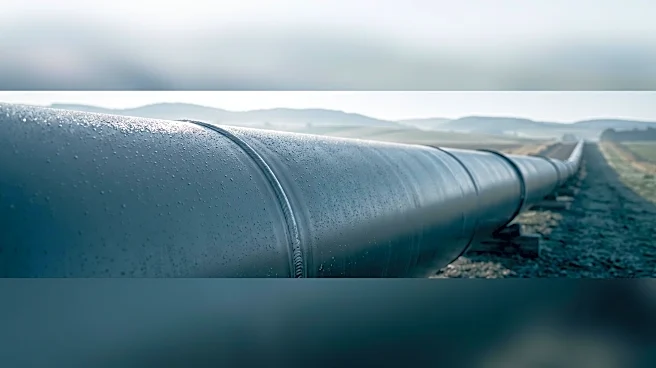
China National Petroleum Corporation (CNPC) has officially commissioned China's longest carbon dioxide pipeline, stretching 277.6 kilometers. This pipeline connects Jilin Petrochemical to the Jilin Oilfield, boasting an annual transport capacity of up
to 3.3 million metric tons of CO2. The project is designed to facilitate enhanced oil recovery (EOR) and permanent geological storage of carbon dioxide. The pipeline's operational launch follows the full commissioning of Jilin Petrochemical’s 800,000-ton-per-year CO2 capture facility in October 2026, which provides a stable supply of CO2 to the new pipeline. This infrastructure represents a significant advancement in China's efforts to manage industrial carbon emissions and utilize CO2 for oil production.
Why It's Important?
The commissioning of this pipeline is a critical development in China's strategy for carbon capture, utilization, and storage (CCUS). By enabling the transport of large volumes of CO2 from industrial sources to oilfields, it supports both environmental goals and energy production. The use of CO2 for enhanced oil recovery can extend the lifespan of existing oilfields, contributing to energy security while simultaneously sequestering carbon. This project demonstrates a practical application of CCUS technology at a large scale, potentially setting a precedent for similar initiatives globally. It also highlights China's growing investment in technologies aimed at reducing its carbon footprint while maintaining economic growth.
What's Next?
CNPC plans to utilize this new pipeline as the backbone for a broader regional carbon capture, utilization, and storage (CCUS) network. This suggests future expansion of CO2 capture facilities and additional pipeline infrastructure to integrate more industrial emitters and storage sites. The success of this project could also spur further technological advancements in CO2 transportation and storage, potentially leading to more efficient and cost-effective CCUS solutions. Other regions and countries facing similar challenges in managing industrial emissions and seeking to enhance oil recovery may look to this project as a model for their own CCUS development.
Beyond the Headlines
This project underscores the dual challenge and opportunity presented by carbon emissions in industrial economies. While the primary goal is to mitigate climate change by capturing and storing CO2, the utilization of CO2 for enhanced oil recovery also extends the life of fossil fuel production. This creates a complex dynamic where environmental goals are intertwined with energy security and economic interests. The long-term implications involve balancing the immediate benefits of increased oil production with the broader imperative of transitioning to a low-carbon economy. It also raises questions about the true 'permanence' of geological storage and the potential for future leakage, which will require ongoing monitoring and technological refinement.