








What's Happening?
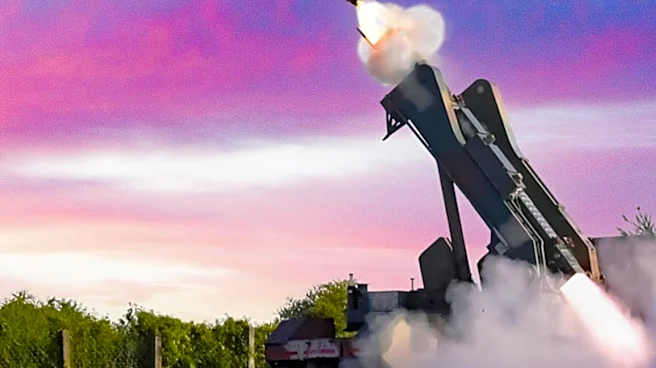
Sweden has finalized a SEK 7 billion ($732 million) agreement to procure Lockheed Martin's M142 High Mobility Artillery Rocket System (HIMARS). This acquisition is part of Sweden's ongoing efforts to enhance its long-range strike capabilities as a new
NATO member. The deal includes over ten launchers and a substantial quantity of ammunition, with initial deliveries anticipated in 2027. The announcement was made at Ärna Air Base, Sweden, in the presence of a U.S. Army HIMARS launcher. Major General Johan Pekkari, head of the Swedish Army, emphasized that this deep-strike capability will complement the Air Force's recently operational Taurus missiles. Additionally, Lockheed Martin and Sweden's defense company Saab have signed a letter of intent to explore integrating Saab’s Ground-Launched Small Diameter Bomb (GLSDB) and producing munitions for HIMARS and other systems, including the Patriot air-defense system (PAC-3). This collaboration aims to bolster European and Swedish munition production, with initial production slated for Saab's factory in Grayling, Michigan.
Why It's Important?
This procurement significantly enhances Sweden's defense capabilities, providing a crucial long-range precision strike option that the Swedish Army currently lacks. The integration of HIMARS, alongside the existing Taurus missiles, strengthens Sweden's deterrence posture and its contribution to NATO's collective security. The collaboration between Lockheed Martin and Saab for munition production, starting in Michigan, highlights the growing transatlantic defense industrial partnership. This initiative is vital for ensuring a secure supply chain for critical armaments, reducing reliance on single-source suppliers, and fostering interoperability among NATO allies. The establishment of Europe's first HIMARS maintenance center in Tampere, Finland, further underscores the strategic importance of regional cooperation in defense sustainment, potentially serving other European nations acquiring HIMARS. This move also reflects a broader trend among European countries to bolster their defense industrial bases in response to evolving geopolitical landscapes.
What's Next?
The first deliveries of HIMARS launchers and ammunition to Sweden are scheduled for 2027. Sweden plans to integrate the Precision Strike Missile (PrSM), with a range of up to 500 kilometers, into its HIMARS systems for striking high-value targets. The letter of intent between Lockheed Martin and Saab will lead to further exploration of integrating GLSDB and establishing munition production, initially at Saab's Grayling, Michigan factory, with potential for future expansion into Europe. Finland will play a crucial role in supporting Sweden with HIMARS maintenance and training, leveraging its existing experience with Lockheed's MLRS variant. The newly established HIMARS maintenance center in Tampere, Finland, is expected to become a regional hub, supporting other European allies. Detailed negotiations and regulatory assessments will follow to formalize the joint production efforts and ensure a robust security of supply for munitions.
Beyond the Headlines
The acquisition of HIMARS by Sweden and the subsequent defense pact with Finland signify a deeper strategic alignment within the Nordic region and with NATO. This move not only addresses immediate defense needs but also lays the groundwork for long-term industrial cooperation and technological transfer. The emphasis on joint munition production, particularly with initial operations in the U.S., highlights a strategic effort to diversify and secure defense supply chains, reducing vulnerabilities to geopolitical disruptions. This partnership could set a precedent for future defense collaborations, fostering greater interoperability and collective resilience across the alliance. The decision to establish a HIMARS maintenance hub in Finland also reflects a forward-thinking approach to regional defense, ensuring operational readiness and logistical support for critical military assets across Europe. This integrated approach to defense procurement and sustainment underscores a shift towards a more unified and self-reliant European defense posture within the broader NATO framework.