


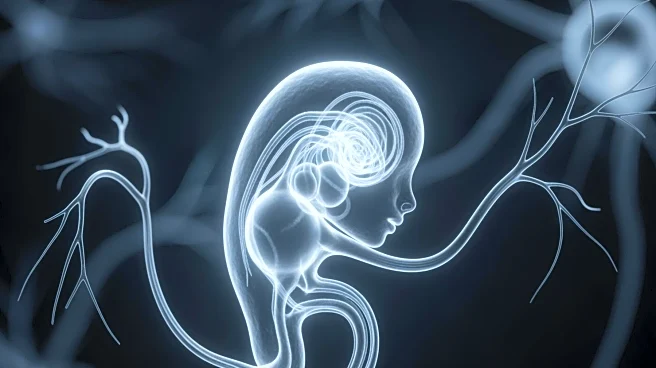

What's Happening?
Researchers have discovered a biological process involving tanycytes, specialized brain cells, that may play a crucial role in preventing the accumulation of tau protein, a hallmark of Alzheimer's disease. The study, published in the journal Cell Press
Blue, utilized animal experiments, cell studies, and patient tissue analyses to explore how these cells help remove toxic tau from the brain. Tanycytes, located in the third ventricle of the brain, facilitate the transport of harmful substances from the cerebrospinal fluid into the bloodstream for clearance. The research highlights the potential of focusing on tanycyte health to improve tau clearance and limit disease progression.
Why It's Important?
This discovery is significant as it opens new avenues for Alzheimer's treatment by targeting tanycytes to manage tau protein buildup. Alzheimer's disease, a major cause of dementia, affects millions of people worldwide, and understanding the mechanisms behind tau accumulation could lead to innovative therapies. The study suggests that maintaining the brain's internal balance through tanycyte health could slow neurodegeneration, offering hope for patients and healthcare systems burdened by the disease. However, challenges remain, including the need for reliable animal models and extensive patient studies to validate these findings.
What's Next?
Future research will focus on overcoming obstacles such as developing accurate animal models and conducting long-term studies with larger patient groups. These steps are crucial to determine the cause-and-effect relationship between tanycyte dysfunction and tau buildup. Additionally, researchers aim to explore therapeutic strategies that protect tanycyte function, potentially leading to new treatments for Alzheimer's disease. The findings underscore the importance of continued investment in neuroscience research to address the complexities of neurodegenerative diseases.