







What's Happening?
U.S. Representative Josh Gottheimer has announced a bipartisan initiative aimed at bolstering the cybersecurity of critical infrastructure, particularly water systems, following recent cyberattacks in New Jersey and other states. The initiative includes
the introduction of the AI Cyber Defense Act, co-sponsored by Democratic Representative Hilary Scholten of Michigan and others, which seeks to provide critical infrastructure operators with advanced AI tools to enhance cybersecurity. The legislation is part of a broader Critical Infrastructure Security Plan that also includes the Securing Our Critical Infrastructure Act. This plan aims to establish a rapid-response service within the Cybersecurity and Infrastructure Security Agency (CISA) to assist small and medium-sized utilities during cyber threats. The initiative responds to vulnerabilities in smaller utilities, which often lack dedicated cybersecurity personnel and rely on outdated infrastructure.
Why It's Important?
The introduction of the AI Cyber Defense Act is significant as it addresses the growing threat of cyberattacks on critical infrastructure, which can have severe consequences for public safety and service reliability. By providing smaller utilities with access to advanced AI tools, the legislation aims to level the playing field, allowing these entities to proactively identify and mitigate vulnerabilities. This is crucial as smaller utilities serve a large portion of the U.S. population but often lack the resources to defend against sophisticated cyber threats. The initiative also underscores the importance of federal support in enhancing the cybersecurity posture of essential services, which is vital for maintaining public trust and ensuring the uninterrupted delivery of water and electricity.
What's Next?
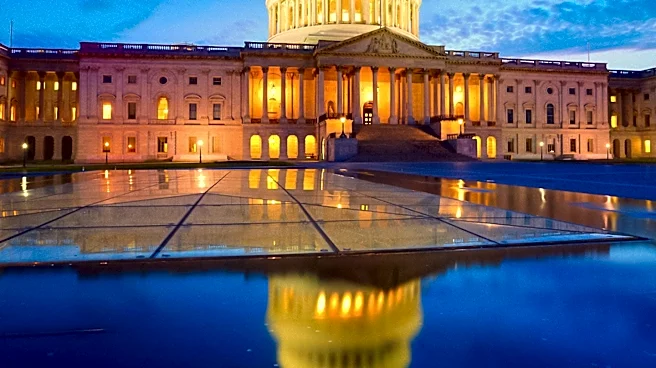
The proposed legislation will need to pass through Congress, where it may face scrutiny and require bipartisan support to be enacted. If successful, the implementation of the AI Cyber Defense Act and the Securing Our Critical Infrastructure Act will involve collaboration between federal agencies like CISA, the Environmental Protection Agency, and the FBI to provide technical assistance and develop long-term cybersecurity strategies. The focus will be on creating a sustainable framework for rapid response and threat notification, particularly for small and rural utilities. Stakeholders, including utility operators and cybersecurity experts, will likely be involved in shaping the final provisions of the legislation.