
What's Happening?
A newly discovered fossil of a microraptor, a type of predatory dinosaur, has been found in northwestern China, dating back 120 million years. This discovery is significant as it expands the known geographical
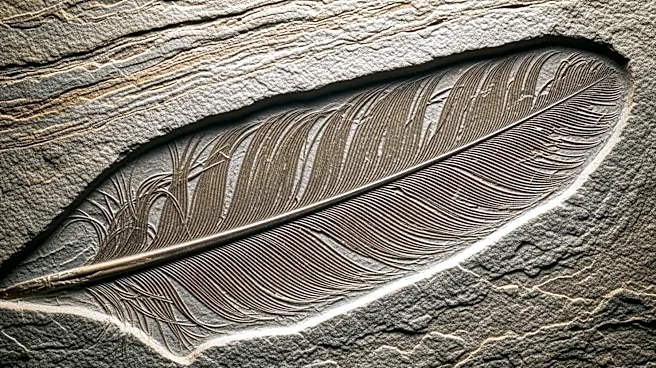
range and timeline of microraptors, which were small, gliding dinosaurs closely related to the velociraptor. The fossil, named Jian changmaensis, was found in the Changma Basin and is the first definitive microraptor specimen discovered outside northeastern China. The fossil's well-preserved shoulder bones provide new insights into the evolution of flight in these feathered dinosaurs, which had birdlike characteristics and could glide between trees.
Why It's Important?
The discovery of Jian changmaensis is crucial for understanding the evolutionary history of dinosaurs and their transition to birds. It provides evidence of the diversity and adaptability of microraptors, which occupied ecological niches similar to modern flying squirrels. This finding also highlights the evolutionary link between non-avian dinosaurs and birds, offering insights into the origins of avian flight. The fossil's preservation in 3D allows for detailed study of its anatomy, which could reveal more about the flight capabilities of these ancient creatures. This research contributes to the broader understanding of dinosaur evolution and the ecological dynamics of the Cretaceous period.
What's Next?
Researchers plan to conduct further studies on the Jian changmaensis fossil to explore its flight or gliding capabilities. This includes scanning the fossil to gain more insights into its anatomical features related to flight. The discovery opens up new avenues for paleontologists to investigate the ecological roles of microraptors and their interactions with other species in their environment. Continued exploration of the Changma Basin may yield additional fossils, providing a more comprehensive picture of the region's prehistoric ecosystem and the evolutionary pathways of early birds.
Beyond the Headlines
The discovery of Jian changmaensis underscores the complexity of dinosaur evolution and the gradual transition to avian species. It challenges the traditional distinctions between dinosaurs and birds, as more fossils reveal overlapping characteristics. This finding also emphasizes the importance of preserving fossil sites like the Changma Basin, which hold valuable information about Earth's biological history. The study of such fossils can inform current conservation efforts by highlighting the long-term impacts of environmental changes on biodiversity.