
What's Happening?
A massive star in the Andromeda Galaxy, known as M31-2014-DS1, has been observed collapsing into a black hole without a supernova explosion. This event, studied by Kishalay De and his team, has led to a new
theory explaining how some stars transform into black holes. The star's core collapsed, forming a black hole, while its outer layers were slowly expelled. This process, driven by convection, prevents most of the star's material from falling into the core, resulting in a slower and less explosive transformation. The findings, published in Science, provide insights into the mechanisms behind black hole formation and challenge existing models.
Why It's Important?
The observation of M31-2014-DS1's collapse into a black hole without a supernova explosion offers a new perspective on stellar evolution. This discovery suggests that convection plays a significant role in the transformation of massive stars into black holes, a factor previously overlooked in theoretical models. Understanding this process could lead to a more comprehensive picture of how black holes form and evolve, impacting our knowledge of the universe's structure and the lifecycle of stars. The findings also highlight the potential for similar events to occur in other galaxies, expanding the scope of black hole research.
What's Next?
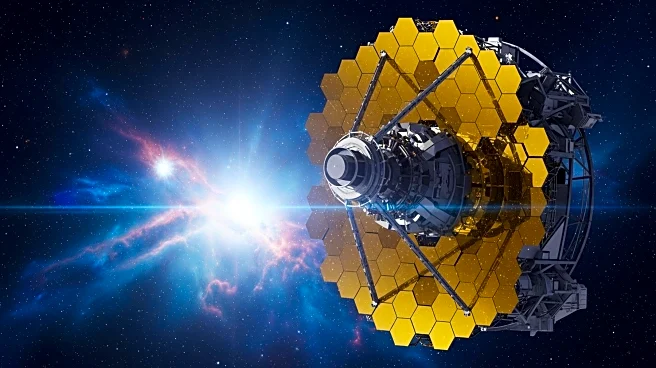
Researchers plan to continue monitoring the fading light from the debris surrounding the black hole using advanced telescopes like the James Webb Space Telescope. These observations will help refine the new theory and improve models of black hole formation. Additionally, the team will explore other stars that may undergo similar transformations, potentially identifying a new class of objects. This ongoing research could lead to breakthroughs in our understanding of black holes and their role in the cosmos.