




What's Happening?
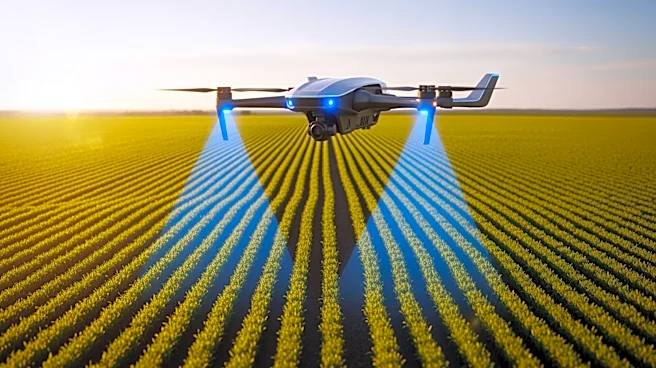
Ethiopia's precision farming market is projected to grow significantly, reaching USD 27.50 million by 2034, according to a report by IMARC Group. This growth is driven by the convergence of precision farming technologies with Ethiopia's massive irrigation
expansion program. The country's irrigated wheat area has expanded from 3,500 hectares to 2.7 million hectares, necessitating the adoption of automated irrigation management systems and data-driven agronomic advisory services. The government's Digital Agriculture Roadmap and the National Agri-Finance Implementation Roadmap (NAFIR) 2025-2030 are creating a supportive ecosystem for precision farming. The market is also benefiting from increased mobile internet connectivity and climate-smart agriculture initiatives.
Why It's Important?
The expansion of precision farming in Ethiopia is crucial for enhancing agricultural productivity and sustainability. As agriculture contributes significantly to Ethiopia's GDP and employs a large portion of the population, modernizing this sector is vital for economic growth. Precision farming technologies can optimize resource use, improve crop yields, and mitigate climate risks, which are increasingly important as Ethiopia faces weather variability affecting rain-fed agriculture. The government's focus on digital transformation and financial reforms is expected to lower barriers to technology adoption, enabling more farmers to access precision farming tools.
What's Next?
The continued rollout of the National Agri-Finance Implementation Roadmap will be key to unlocking financing for precision farming equipment and services. As mobile internet penetration increases, more farmers will gain access to real-time data and advisory services, further driving the adoption of precision technologies. The introduction of 5G networks and data centers is expected to enable next-generation applications, enhancing the efficiency and effectiveness of precision farming practices.
Beyond the Headlines
The adoption of precision farming in Ethiopia could have broader implications for food security and economic resilience in the region. By improving agricultural efficiency and productivity, Ethiopia can strengthen its position as a leading agricultural producer in sub-Saharan Africa. The focus on digital agriculture also aligns with global trends towards sustainable and technology-driven farming practices, potentially positioning Ethiopia as a model for other developing countries.