



What's Happening?
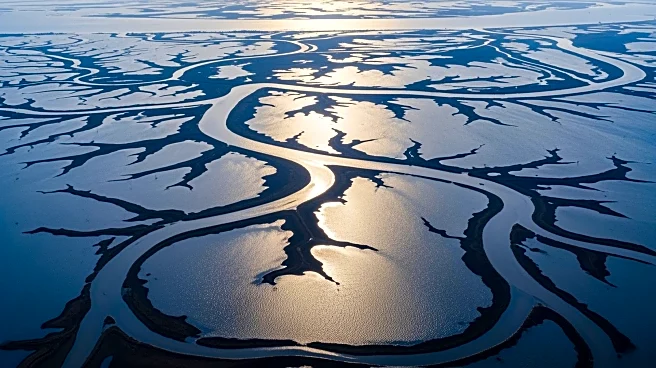
A recent study published in Nature highlights that many of the world's major river deltas, including the Nile, Amazon, and Mississippi, are sinking faster than global sea levels are rising. The research, led by Virginia Tech geoscientists, attributes
this subsidence primarily to groundwater extraction, reduced sediment supply, and urban expansion. The study provides a high-resolution assessment of elevation loss across 40 river deltas worldwide, revealing that subsidence already exceeds local sea-level rise in 18 of these deltas. This trend poses an increased flood risk for over 236 million people living in these regions.
Why It's Important?
The findings underscore the urgent need for intervention as subsidence exacerbates the risk of catastrophic flooding and land loss in densely populated delta regions. These areas are home to millions of people and vital infrastructure, making them particularly vulnerable to the combined effects of subsidence and sea-level rise. The study highlights the role of human activities, such as groundwater extraction and urbanization, in driving subsidence, suggesting that targeted management strategies could mitigate these impacts.
What's Next?
The study suggests that reducing groundwater extraction and replenishing aquifers could help manage subsidence. Additionally, controlled flooding and sediment diversions may increase sediment deposition, offsetting some of the land loss. Implementing these measures, alongside flood protection and climate adaptation strategies, could significantly reduce long-term risks for delta regions.