





What's Happening?
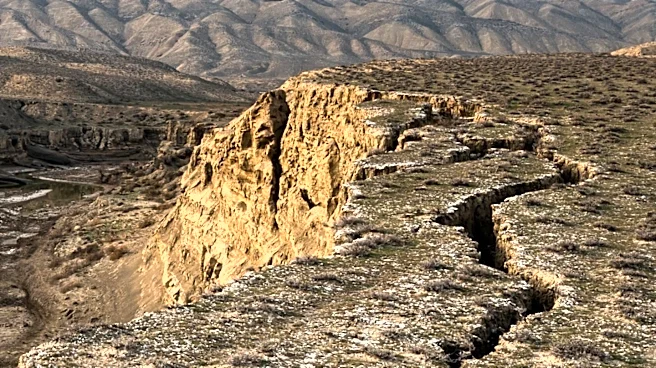
New research conducted by San Jose State University (SJSU) indicates that the San Andreas Fault is slipping at a faster rate than previously understood. SJSU Professor Kim Blisniuk discussed these findings, noting that the rate of slip appears to be constant
over a 10,000-year window in the studied section, rather than decreasing as some prior data might have suggested. This discovery is significant because faults that move faster generally have the potential to produce earthquakes more frequently. While the research has not yet been published or peer-reviewed, it serves as a crucial reminder for California residents to maintain earthquake preparedness. Historically, major earthquakes like the 1989 Loma Prieta and 1906 San Francisco events occurred along the San Andreas Fault zone, reinforcing the understanding that future seismic activity is inevitable.
Why It's Important?
This research has profound implications for earthquake preparedness and seismic hazard assessments across California. A faster slip rate on the San Andreas Fault suggests a potentially higher frequency of significant earthquakes, which could necessitate a re-evaluation of building codes, emergency response plans, and public awareness campaigns. For residents and businesses in California, particularly those near the fault line, this information underscores the urgency of having robust earthquake preparedness kits and safety protocols. The economic impact of a major earthquake could be catastrophic, affecting infrastructure, real estate, and various industries. Understanding the fault's behavior more accurately allows scientists and policymakers to better anticipate risks and allocate resources for mitigation and resilience efforts, potentially saving lives and reducing damage in future seismic events.
What's Next?
The immediate next step for this research is its publication and peer-review process, which will allow the scientific community to scrutinize and validate the findings. If confirmed, these new insights into the San Andreas Fault's slip rate will likely prompt updated seismic hazard models and risk assessments by geological surveys and emergency management agencies. This could lead to revised public safety advisories and potentially influence urban planning and infrastructure development decisions in earthquake-prone areas. For the public, the emphasis will remain on continuous earthquake preparedness, including securing homes, developing family emergency plans, and assembling survival kits. Educational campaigns may be intensified to ensure residents are aware of the updated understanding of seismic risks and how to respond effectively.
Beyond the Headlines
The revelation of a faster-slipping San Andreas Fault delves into the complex and dynamic nature of plate tectonics and its direct impact on human civilization. This scientific advancement highlights the continuous evolution of our understanding of natural phenomena and the critical role of ongoing geological research. Beyond the immediate concerns of earthquake preparedness, this finding could influence long-term urban development strategies, encouraging more resilient infrastructure and decentralized critical services to withstand potential seismic events. It also underscores the ethical responsibility of scientists to communicate complex risks clearly to the public and policymakers, fostering a culture of preparedness rather than panic. The San Andreas Fault, a symbol of California's geological volatility, continues to be a focal point for cutting-edge research that shapes the safety and future of millions.