




What's Happening?
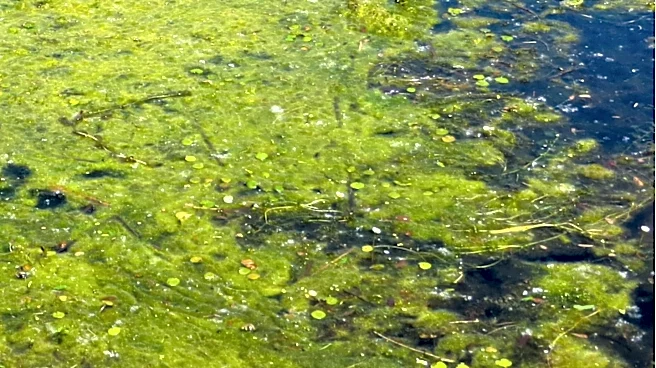
Lough Neagh, a significant body of water, is currently experiencing severe pollution, primarily attributed to animal waste products. This environmental degradation has led to putrid and rancid algal growth, making the fish caught in the lough undesirable
and potentially unsafe for consumption. The issue is exacerbated by factors such as zebra mussels, which pilfer plankton, and the discharge of micro-bacteria from areas like Gortnagallon and Aghagallon. The current ecological crisis in Lough Neagh draws a grim parallel to its myth-origin story, which describes the lake's formation from the urination of a giant horse belonging to Eochaidh, leading to a well overflowing and drowning him. This ancient narrative, where the lake's birth is linked to animal waste, resonates with the contemporary pollution challenges.
Why It's Important?
The severe pollution of Lough Neagh carries significant environmental, economic, and cultural implications. Environmentally, the extensive algal blooms and micro-bacterial contamination threaten the aquatic ecosystem, potentially leading to a collapse in fish stocks and biodiversity. Economically, the decline in fish quality and the general degradation of the lough could impact local fisheries and tourism, affecting livelihoods in surrounding communities. Culturally, the pollution tarnishes a natural landmark deeply embedded in local folklore and history, diminishing its value as a heritage site. The situation also highlights broader issues of agricultural runoff and waste management, which are critical concerns for water bodies globally. The inability to address such pollution effectively can lead to long-term ecological damage and public health risks, underscoring the urgent need for sustainable environmental practices.
What's Next?
Addressing the pollution in Lough Neagh will likely require a multi-faceted approach involving local authorities, environmental agencies, and agricultural sectors. Immediate steps may include implementing stricter regulations on agricultural waste management to reduce runoff into the lough. There could be efforts to monitor and control the spread of invasive species like zebra mussels, which contribute to ecological imbalance. Public awareness campaigns might be launched to educate local communities and farmers on sustainable practices. Long-term solutions could involve significant investment in wastewater treatment infrastructure and ecological restoration projects aimed at improving water quality and restoring biodiversity. Political will and cooperation among various stakeholders will be crucial to developing and executing an effective strategy to mitigate the current pollution and prevent future degradation of Lough Neagh.
Beyond the Headlines
The pollution of Lough Neagh, juxtaposed with its mythological origins, offers a profound commentary on humanity's relationship with nature. The ancient myth, which attributes the lake's creation to animal waste, eerily foreshadows the current environmental crisis caused by modern agricultural practices. This parallel suggests a cyclical pattern of human impact on natural resources, where the very elements that sustain life can become sources of degradation. The situation raises ethical questions about stewardship and responsibility towards the environment, particularly when economic activities directly conflict with ecological health. It also highlights the cultural significance of natural landmarks, where environmental damage not only affects ecosystems but also erodes shared heritage and traditional narratives. The ongoing struggle to clean Lough Neagh serves as a microcosm for global environmental challenges, urging a re-evaluation of our collective approach to conservation and sustainable living.