



What's Happening?
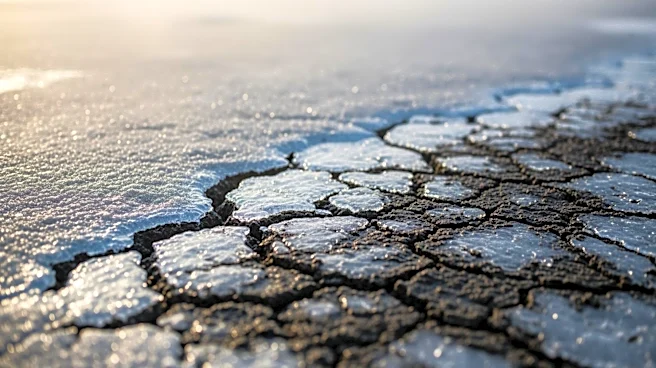
A study led by geoscientist Michael Rawlins from the University of Massachusetts Amherst has revealed significant changes in the Arctic due to thawing permafrost. Focusing on a Wisconsin-sized area of Alaska's North Slope, the research shows increased
runoff and carbon release into the Beaufort Sea. The study, published in Global Biogeochemical Cycles, highlights the deepening of the permafrost's active layer, which is releasing vast amounts of dissolved organic carbon (DOC) into rivers and oceans. This process contributes to the carbon cycle and could exacerbate global warming through increased carbon dioxide emissions.
Why It's Important?
The findings underscore the critical role of Arctic rivers in the global ecosystem, as they deliver a disproportionate amount of freshwater and carbon to the ocean. The release of ancient carbon from thawing permafrost could create a feedback loop, accelerating climate change. This study provides valuable insights into the impacts of climate change on Arctic landscapes and the potential consequences for global carbon cycles. Understanding these processes is essential for developing strategies to mitigate climate change and protect vulnerable ecosystems.
What's Next?
Researchers will continue to study the effects of permafrost thaw on Arctic ecosystems, focusing on the implications for coastal estuaries and the broader climate system. The study calls for more comprehensive land-to-ocean connection research to fully understand the impact of global warming on coastal ecosystems. As the Arctic continues to warm, policymakers and scientists will need to collaborate on strategies to address the environmental and societal challenges posed by these changes.